Jul 26

Obscure but memorable No. 5 hitters for the Dodgers

Three weeks ago, in honor of Aaron Miles, we talked about “obscure but memorable No. 3 hitters for the Dodgers.”

Today, once again in honor of Aaron Miles, let’s look back at the Dodgers’ most unusual No. 5 hitters since their last World Series title.

Here’s the all-time Los Angeles Dodger batting order by frequency, dating back to 1958:

1) Maury Wills (1,276)
2) Bill Russell (679)
3) Willie Davis (1,250)
4) Steve Garvey (819)
5) Ron Cey (576)
6) Mike Scioscia (437)
7) Mike Scioscia (510) 8) Bill Russell (668)
9) Don Sutton (522)

* * *

From the Dodger press notes and the Elias Sports Bureau:

Most strikeouts per nine innings in one month, minimum 15 games
9.70 Cubs (August 2002)
9.53 Cubs (September 2006)
9.36 Dodgers (July 2011)
9.30 Astros (August 1998)
9.29 Cubs (May 2001)

Jul 08

Wandering Dodgers

If Chad Billingsley isn’t traded before his contract extension kicks into gear in 2013, he will have bucked a trend.

No homegrown Dodger has stayed in Los Angeles after becoming eligible for free agency since Darren Dreifort (1994-2004) and Eric Karros (1991-2002). Before them, you’d have to go back to the members of the 1988 World Series team, such as Orel Hershiser. Everyone else that came up from the farm since that time was either traded or left to roam the streets of MLB to find their riches elsewhere.

Jul 06

Latest loss leaves one longing for 2009


Two years ago tonight, the Dodgers were 52-30, seven games better than any other team in the National League, three games better than any team in the majors.

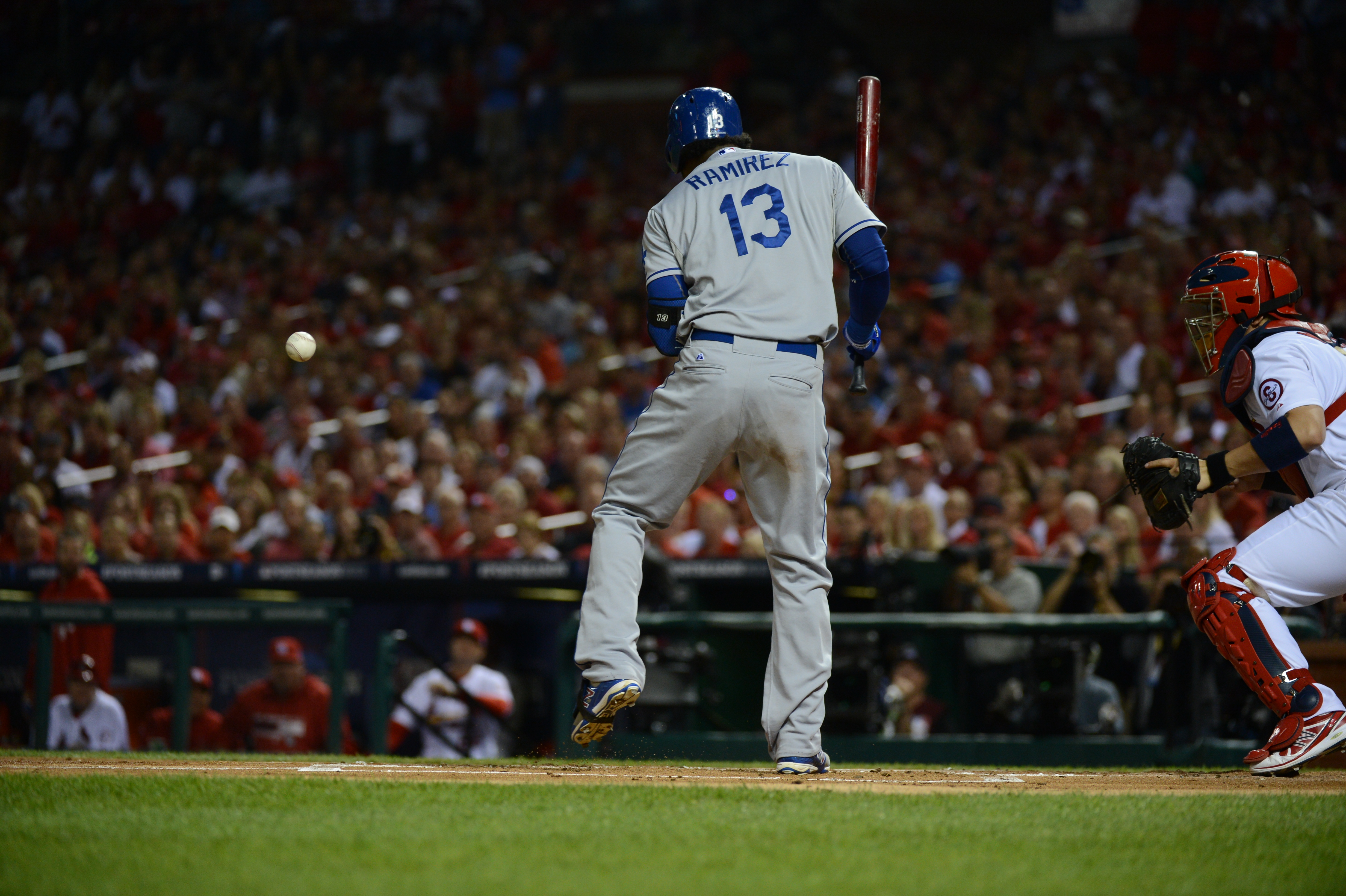
Manny Ramirez, nowadays the subject of much ridicule (renewed by his recent appearance in the Dodgers’ bankruptcy filing), had just come off the suspended list – and, contrary to what people might have expected or might remember, was about to begin a massive hot streak. Over the next two weeks, Ramirez would go 15 for 41 with seven extra-base hits and six walks, for a .458 on-base percentage and .707 slugging percentage.

On July 21, Ramirez was hit by a pitch on the left hand. That injury forced him to the bench the following night, the night the Dodgers were giving away Manny Ramirez bobbleheads.  He came on to pinch-hit in the bottom of the sixth inning with the bases loaded and … Bobbleslam.

The Dodgers were 61-34.

The contrast between then and now is so sharp. The idea of a losing Dodger team is no longer alien, the fact that the team’s losing streak grew to five games with tonight’s 5-3 loss to the Mets is no surprise. These Dodgers are 37-51, all but reversing the performance of their 2009 counterparts. Then – Manny’s curtain call. Now – scrub’s scrub Eugenio Velez tagged out, not even halfway to first base, on a grounder to end the game.

Every single game this week, a Dodger starting pitcher has pitched well heading into the sixth inning, before faltering without rescue. Every single game, you might have cynically felt the inevitability of defeat, yet if you’re anything like me, not quite believed that the result could be so predetermined every single time. In fact, after Hiroki Kuroda let a 1-1 tie become a 4-1 deficit in the top of the sixth, the Dodgers came back to score two runs in the bottom of the inning. They had scored three runs, their highest total since Friday.  And there were still three innings to go.

But we are a long, long way from 2009.

Chris Pizzello/APJoe Torre waits as Manny Ramirez, with an OPS of 1.129 at the time, has his hand examined after being hit by a pitch on July 21, 2009.

The 1988 season has been our touchstone, and will continue to be for some time, maybe for our entire lifetimes. But it’s clear to me that 2009 is an underappreciated season. The offense was solid at every position, with the weakest link being Russell Martin, who still managed a .352 on-base percentage at catcher. Juan Pierre split the Dodger community in two, but even if you thought he was overrated as the team’s spiritual MVP, he was useful and sometimes heroic. Andre Ethier and Matt Kemp were blossoming. James Loney was still promising. Casey Blake was one of the better third basemen in the NL. Rafael Furcal managed to stay healthy for 150 games. Cycle-hitter Orlando Hudson sparkled until he was overtaken by the red-hot Ronnie Belliard. Other than handwringing over Ramirez’s suspension, there was little more to gripe over than Kemp batting eighth nearly a couple dozen times.

The starting rotation wasn’t spectacular, but it was capable, with 21-year-old Clayton Kershaw posting a 2.79 ERA and Jon Garland and Vicente Padilla providing late season assistance after Chad Billingsley hit a rough spot. Jonathan Broxton, Ramon Troncoso and Ronald Belisario, none older than 26, led a dominant bullpen that went into overdrive when midseason pickup George Sherrill allowed only two earned runs in 27 2/3 innings.

It is Broxton, of course, who is considered the poison in this tale. He began the 2009 playoffs with five consecutive games of doing his job. In the sixth, Game 4 of the 2009 NLCS, he brought on infamy. And it’s understandable that fans today might be even more bitter toward the reliever, who spoiled a great team’s chance to even up the NLCS at 2-2 and catapult toward that long-awaited World Series title.

Stephen Dunn/Getty ImagesJuan Uribe and Eugenio Velez, two of your 2011 Dodgers, look for some cheer before the game.

But whether you credit Broxton, who in the regular season had 36 saves in 42 opportunities and 13.5 strikeouts per nine innings, for helping the Dodgers get in position to win a championship, or whether you hold him accountable for the failure to achieve the dream, it’s remarkable to think of where the Dodgers and their fans were two years ago. Out of our minds with elation at the rebounding hero Ramirez. Somersaulting over the Game 2 NLDS bottom-of-the-ninth comeback win over St. Louis. On seats’ edge as Broxton threw that 1-1 pitch to Jimmy Rollins, one out away from the latest, biggest victory.

I am someone who asks what might have been. There isn’t a year that goes by that I don’t question decisions I made a decade or two ago. I’ve made mistakes as bad as the fastball Broxton threw to Rollins and wondered “what if?” But I can’t look back at 2009 now without instinctively feeling good about it, recalling so many wonderful times. And thinking that even with its short-circuited ending, how gladly would I take it back. And thinking how far away it seems.

Jul 05

Obscure but memorable No. 3 hitters for the Dodgers

In honor of Aaron Miles batting third for Los Angeles tonight, here’s a link to all those who have started No. 3 in the batting order for the Dodgers since the end of the 1988 World Series.

The list includes Bill Bean (career OPS .574), who went 3 for 4 on October 1, 1989. That’s the time of year you’d expect to find someone of Bean’s ilk batting third in the lineup.

Then there’s Orel Hershiser, who officially started at third base on September 15, 1993 so that Dave Hansen could bat for him in the first inning in pursuit of a pinch-hitting record. Pedro Martinez did the same thing five days later.

There’s Mike Kinkade, Mark Sweeney, Delwyn Young, Tom Goodwin (!), Antonio Perez. … Oscar Robles hit third 11 times for Jim Tracy’s 2005 Dodgers.

Aw, sweet memories.

Jul 05

Gordon gets his stolen-base trifecta

From the Dodgers’ press notes:

Following a lengthy debate, official scorer Ed Munson has changed a seventh-inning fielder’s choice from last Friday night’s game in Anaheim to a stolen base for Dee Gordon. The scoring change gives Gordon nine steals on the season and makes him the first Dodger since Harvey Hendrick on June 12, 1928 to steal second, third and home in the same inning. The last Major Leaguer to accomplish the feat was Jayson Werth, who did so on May 12, 2009 vs. the Dodgers at Citizens Bank Park.

Did Bob Timmermann’s tweet play a role?

Jul 01

The first commercial Dodgers broadcast, 70 years ago today

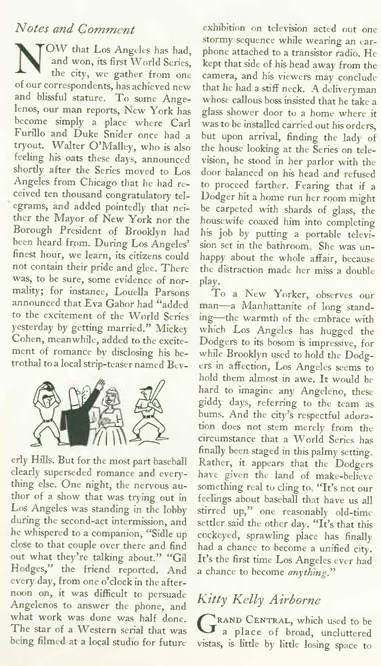
Cynthia Littleton of Variety and Tom Hoffarth of the Daily News have pieces on today’s 70th anniversary of what’s said to be the debut of commercial television – with both noting that a Dodgers-Phillies (Brooklyn loses, 6-4) game was part of the original programming. The Dodgers also played in the first televised baseball game, in 1939.

… Television sets had been available in Gotham department stores such as Macy’s since the 1939 World’s Fair broadcast got early adopters excited about the potential of television. But most of the sets in use in 1941 were set up to receive 441 lines of picture while the FCC had set the commercial telecasting standard at 525. That made for some muddy visuals early on.

Variety was unimpressed by the overall presentation, the hucksterism and production value.

“It was all pretty corney,” Daily Variety reported on July 2, 1941. “Especially a crowd of announcers and radio hangerson eating chocolate layer cake made with Spry and yumyumming. Practically all the sets in the New York area were picking up 525 line images on old sets adjusted to 441 lines. This cut down definition, but it was not engineering definition that was hard to bear. It was the low grade showmanship.”

WNBT and WCBW broadcast about 15 hours a week in those first few months. But the flagship stations for the Peacock (NBC) and the Eye (CBS) didn’t get much time to refine their product before the U.S. entry into WWII put the kibosh on virtually all commercial telecasts. The technology and resources that David Sarnoff and William Paley were plowing into TV were immediately diverted to the war effort.

The growth of TV would be stymied for the better part of the 1940s, until a manic vaudevillian named Milton Berle hit it big with “Texaco Star Theater” in 1948 and TV sets starting flying off the shelves.

* * *

  • Ken Arneson, retired Baseball Toaster chieftain, has a guest piece on Baseball Prospectus today. As I always say, ‘nuf said.
  • Here’s a new baseball cartoon blog: Gary Finkler’s 7th Inning Sketch, complete with requisite Frank McCourt image.
  • The Collected Sins of the Frank & Jamie McCourt era, by Mike Petriello of Mike Scioscia’s Tragic Illness. Unenjoy!
Jun 05

Where’s Kempo

Where Matt Kemp ranks among National Leaguers, according to Baseball-Reference.com:

1. – offensive wins above replacement (2.9)
1. – power-speed number (14.5)
1t – RBI (46)
1t – total bases (125)
2. – games played (59)
2. – home runs (15)
2. – slugging percentage (.576)
3. – runs created (49)
3. – win probability added (2.6)
4. – at-bats per home run (14.5)
4t – adjusted OPS (170)
4t – intentional walks (6)
4t – times on base (98)
4t – wins above replacement (2.9)
5. – offensive win percentage (.759)
5. – OPS (.971)
5t – stolen bases (14)
6t – strikeouts (55)
7t – hits (69)
8. – on-base percentage (.395)
8t – extra-base hits (26)
9. – batting average (.318)

Kemp is fifth in the NL in total average (.341), according to Baseball Prospectus. Mike Petriello of Mike Scioscia’s Tragic Illness has more on what Kemp could achieve this year.

* * *

  • Fasten your seat belts. Here are the scheduled pitching matchups for the upcoming Philadelphia series:

    Monday – Ted Lilly vs. Cliff Lee
    Tuesday – Rubby De La Rosa vs. Roy Oswalt
    Wednesday – Hiroki Kuroda vs. Cole Hamels

    The Phillies have lost four straight games, two each to Washington and Pittsburgh.

  • Via Baseball Think Factory comes this March 1957 Sports Illustrated piece that is said to be the first mention of “Chavez Ravine” in the magazine. It acknowledges that Walter O’Malley’s primary desire was to stay in Brooklyn, but here’s my favorite line: “It was even suggested that with the coming of the jet age, when the Atlantic and Pacific coasts will be only three or four hours apart, New Yorkers could get to a Dodger game in Chavez Ravine in less time than it now takes to reach Ebbets Field.”

    Conclusion: “The next chapter in the serial will now have to be written by the City of New York some time before next October. Should they fail to get busy, O’Malley and his Dodgers will almost surely head west like so many other overcrowded, ill-housed Easterners. In that event, major league baseball will be a coast-to-coast reality no later than 1960.”

  • Orel Hershiser has joined Steve Garvey’s group that’s interested in purchasing the Dodgers, reports Jill Painter of the Daily News. It’s still not clear what kind of financing the Garvey-Hershiser group would have, because initial reports linking it to billionaire Ron Burkle have been disputed.
  • Red-hot Dodger minor-league reliever Shawn Tolleson (0.63 ERA, 52 strikeouts in 28 2/3 innings this year) and Dodger ace Clayton Kershaw were groomsmen at each other’s weddings this offseason, notes Inside the Dodgers, which passes on a link to an upcoming Dodgers Magazine feature on the pair.
  • Dennys Reyes, who made his major-league debut with the Dodgers in 1997, is one of 21 players to steal a base in his first game and then never do so again in his career, according to Baseball-Reference.com. Reyes has by far the most appearances of anyone on the list. On July 13, 1997, Reyes walked, went to second on a single, stole third and scored on an error. He pitched six innings that game and got the win, one of 10 in his career as a starting pitcher.
  • Oakland has designated former Dodger Andy LaRoche (.654 OPS) for assignment.
  • Not a Dodger note, but I thought it was cool: According to the Elias Sports Bureau, Jose Reyes is only the second player since 1926 to have 10 triples by June 4. Willie Wilson in 1985 was the other.
Jun 04

Majestic Bison and the Bisonettes rescue Dodgers, 11-8


Al Behrman/APFly away, ball. Fly away.

Al Behrman/APClayton Kershaw struck out nine of the first 15 batters he faced, but then the game got crazy.

Clayton Kershaw worked the Reds over for the first five innings today like Ali worked the ring. The fifth inning in particular was just athletic poetry, Kershaw striking out the side, and I was in thrall.

Leading 1-0, Kershaw had faced the minimum number of batters in taking a one-hitter heading into the sixth inning, and then things just went haywire. Ramon Hernandez singled, and two outs later, Drew Stubbs walked. Brandon Phillips then fisted a 1-1 pitch to right field, just over the head of second baseman Aaron Miles, a them’s-the-breaks hit to tie the game.

And then Joey Votto blasted a three-run home run.

And before he was out of the game in the seventh, Kershaw had given up six runs, and Mike MacDougal had allowed another, and I was bereft.

So of course, you know what happened next. No, not that. No, not that either. No, keep going down the list.

First, Matt Kemp went bananas. Bananas, I say! A solo homer and a grand slam in back-to-back innings to tie the game at 7.

The slam followed an out-of-the-blue rally started with one out in the top of the eighth on a pinch-hit single by Tony Gwynn, Jr., his first hit to the outfield in a full month. Jamey Carroll and Aaron Miles followed with singles to make the score 7-3, and then Andre Ethier (who threw a runner out at home minutes before) drew a walk off Reds lefty reliever Bill Bray. The Bison came up, and on a 1-0 pitch from Logan Ondrusek, who had allowed two homers in 32 innings this season, sent one over the left-center-field fence to tie the game.

The home runs, Kemp’s 14th and 15th of the season, gave him more home runs than steals for the first time this year and put him on a pace for 41 homers and 38 steals this season. According to the Dodgers, he is the team’s first player to hit 15 homers in his first 59 games since Shawn Green in 2001. Green finished that season with a club-record 49.

That put the Dodgers in position for quite an event. According to Fox, the Dodgers’ last win after trailing by 5+ in the eighth inning was May 9, 1994, and Los Angeles has won only three such games since 1958. (Of course, Reds manager Dusty Baker has seen a five-run lead disappear painfully in the past.)

But there was still the matter of pushing across the winning run. Scott Elbert held off the Reds with a 1-2-3 eighth, and Matt Guerrier pitched a shutout ninth. Javy Guerra retired Scott Rolen and Jay Bruce with two on to survive the 10th.

Finally, in the 11th, the Dodgers busted through with Scrub-ball, scoring two runs on singles by … Juan Castro … Gwynn … Carroll (4 for 5) … and Miles (3 for 5, 3 RBI). Reds pitcher Carlos Fisher, the losing pitcher in Cincinnati’s 19-inning epic against the Phillies on May 25, then threw away an Ethier double-play grounder, opening the door for the Dodgers to score two more runs, Kemp getting his sixth RBI of the game on a fielder’s choice.

In only 27 of their previous 58 games had the Dodgers scored more runs than they scored in today’s 11th inning.

Guerra, who last pitched two innings May 4 in Chattanooga, was left to start the bottom of the 11th despite his hard-working 23 pitches in the 10th. (He actually walked in his first major-league plate appearance.) He gave up a leadoff single to Ryan Hanigan and one out later was replaced by Ramon Troncoso. A groundout by Paul Janish drove in a run charged to Guerra (his first since May 22), but the Dodgers were one out away.

Then, Chris Heisey singled. Then, Stubbs singled. That meant that the Reds would in fact get the tying run to the plate in Phillips, with Votto on deck and Rolen in the hole.

Strike. Ball. Strike. Ball.

Just as he did to drive in the first run against Kershaw hours before, Phillips went to right field. It looked very much like a potential hit off his bat. But this one went a little deeper, and Ethier was able to come in and catch it.

Dodgers 11, Reds 8. Wow, and whew.

Jun 02

Off-day links

The next edition of Dodger Cogs and Dogs will be June 16. In the meantime …

  • MLB’s Dodger hall monitor, Tom Schieffer, was interviewed by Tony Jackson of ESPNLosAngeles.com.

    … “I don’t think there is any question there is a strain between the franchise and the community right now,” Schieffer said. “And that isn’t the community’s fault.” …

    “Have you been approached by anyone in support of Frank?” I asked.

    Schieffer laughed, then gave me the answer I fully expected.

    “I’m not going to go there,” he said. …

  • Steve Henson of Yahoo! Sports has a wonderful personal remembrance of Sparky Anderson.
  • The saga of Vin Scully’s covered-up star on the Hollywood Walk of Fame, first uncovered (the story, not the star) by Roberto Baly of Vin Scully Is My Homeboy, has only gotten crazier, writes Tom Hoffarth of the Daily News.
  • Chris Jaffe of the Hardball Times writes about the 50th anniversary of what he calls “baseball’s most surreal bottom of the ninth,” and (insert Vin Scully’s voice here) it had to be the Giants and the Dodgers.
  • Brandon Lennox of True Blue L.A. has capsules on seemingly every 2011 MLB draft-eligible player who is related to a past or present Dodger. You’ll love looking at the names.
May 24

May bitter blues

May has historically been a good month for the Dodgers since they moved to Los Angeles. So it might come as no surprise that the 2011 Dodgers are on pace for their West Coast worst.

They’ll need to go 4-3 over their final seven games this month just to avoid matching Los Angeles’ worst May ever.

Worst Mays in Los Angeles Dodger history
.333 7-14, 2011 (seven games remaining)
.393 11-17, 1958
.393 11-17, 2005
.393 11-17, 1995*
.423 11-15, 1984
.423 11-15, 1987
.433 13-17, 1998
.452 14-17, 1959*
* reached postseason

Tony Jackson has more on the woebegone Dodgers at ESPNLosAngeles.com.

May 18

Looking back at the worst Dodgers starts since ’88


Ronald C. Modra/Sports Imagery/Getty ImagesJohn Shelby finished second on the Dodgers in home runs in 1987 at age 29, then declined.

As Dodgers watchers everywhere wonder how much latitude struggling James Loney will get, I thought I’d take a look at how much latitude others in similarly dire straits have gotten.

Loney has a .534 OPS, putting him firmly in position to have one of the worst Dodgers starts through the end of May of any regular since 1988:

Worst OPS through May
(minimum 3.1 plate appearances per team game)
.452 John Shelby, 1989
.457 Alfredo Griffin, 1988
.532 Mike Davis, 1988
.582 Cesar Izturis, 2003
.595 Jose Offerman, 1994
Source: Elias Sports Bureau (not adjusted for park factors)

Here’s what happened next to those five:

John Shelby, 1989
Shelby came to the Dodgers in a May 1987 trade and hit 21 homers in 120 games. He declined in 1988 to a .715 OPS but still contributed 10 homers and respectable defense in center field for the World Series champs. However, the roof caved in the following year.

He finished April batting .186 with two extra-base hits — and then got worse. In May, he got two more extra-base hits, but his batting average fell to .168 — and then got worse. Still playing almost every day, he slid to .160 — going 0-for-10 in the 22-inning game at Houston — although he did hit his one and only home run of the year that month.

You might conclude that there was a lack of offensive alternatives, especially considering that injuries limited Kirk Gibson to 71 games, but Gibson missed only four weeks before the All-Star Game and played regularly in June (including an 0-for-8 game June 17 against San Diego). Mike Marshall was off to a slow start in right field, but on the bench was Mickey Hatcher, who batted .307 before the All-Star break. However, none of those three could really play center field — although the Dodgers did try Gibson there occasionally.

In June, the Dodgers called up 24-year-old Jose Gonzalez. He mostly rode the pine in the early going but got a week’s worth of starts in late June and went 12-for-26 with three walks, at which point he began getting the majority of playing time in center field. Franklin Stubbs, Billy Bean without an “e” and Mike Huff were among those getting a shot, as the Dodgers looked for anyone who could help.

Shelby was sent to the minors in July by Dodgers general manager Fred Claire. “They said I could either come to Albuquerque … or be released,” Shelby told the Los Angeles Times later that year. After an .810 OPS in 32 games with the Dukes and manager Kevin Kennedy, he returned to the majors to play much of the final five weeks in center for the Dodgers and hit his season peak. Unfortunately, that peak was merely a .248 batting average with only three walks to go with 26 strikeouts — a .583 OPS. He never got it together.

He remained a Dodger until the next June, however, before he was released. He signed with Detroit and homered in his first game as a Tiger.

Alfredo Griffin, 1988
Savvy readers will notice the Dodgers went to the World Series despite two horrific starts from newly acquired regulars. One was Griffin, who came in a big, multiplayer trade with Oakland with the intention of ending the Dodgers’ shortstop-by-committee approach of 1987 (Mariano Duncan, Dave Anderson and Glenn Hoffman).

Griffin was hitting a robust .224 (.642 OPS) through April 23, then slumped to a .128 batting average and .334 OPS over the next four weeks, leaving him at .457 when he was sidelined for two months with a broken right hand from a Dwight Gooden fastball. Anderson got most of the starts in Griffin’s absence and almost stole the job for good with a Jamey Carroll-like .309 batting average and .416 on-base percentage in his first 40 starts, but he tailed off dramatically just as Griffin was nearing his return.

Griffin, still probably not completely healed, had a .558 OPS the rest of the season, then went 7-for-41 with two walks and one extra-base hit in the postseason.

Eric RisbergMike Davis found redemption in the 1988 World Series.

Mike Davis, 1988
Before the ’88 season, the Dodgers were counting on a free-agent signing in a big way — but until Gibson became available, that free agent was Davis, who hit 65 homers in his final three seasons with the A’s. But Davis reached the end of May without a single long-distance call, struggling with a .210 batting average, .283 on-base percentage and .248 slugging percentage.

He started 38 of the Dodgers’ first 41 games, but it was around the end of May that manager Tommy Lasorda’s patience began to run out. Davis started only 11 of the next 81 games, although he never went more than a few days without an appearance. Mike Marshall moved to right field from first base, where Lasorda mixed together a combo of players including Hatcher, Stubbs, Danny Heep, Tracy Woodson and, until he got traded to St. Louis, Pedro Guerrero.

Stubbs would by default be considered the player who replaced Davis in the lineup, and the former first-round pick wasn’t all that much to write home about with a .288 on-base percentage and .376 slugging for the year. But Davis never got any better. From July 25 on, he went 10-for-70 with six walks, a .394 OPS.

It was this year-long collapse that made the two-out walk he drew off Dennis Eckersley in the bottom of the ninth inning of Game 1 of the 1988 World Series so improbable and impossible in its own right. He then hit a home run in the clinching Game 5, matching his entire regular-season total.

Cesar Izturis, 2003
Izturis became the Dodgers’ regular shortstop in 2002 at age 22, his first year with the team after coming in a trade from Toronto. As he was well above average in the field, the Dodgers were willing to tolerate almost anything from him with the bat, riding out a .512 OPS after May 1 that year.

The following season brought hope for improvement, but after a 5-for-9 start in an opening series at Arizona, Izturis was down to a .582 OPS through May. Unlike his predecessors on this list, his glove and health kept him in the lineup. He played 158 games in 2003 and started 154, even though he barely showed any improvement at the plate, finishing the season at .597.

Two years later, Izturis reversed his fortunes at the plate so dramatically that he was batting .342 at the end of May with an .812 OPS, numbers that propelled him to the All-Star Game despite a June in which he went 9-for-86 with four walks.

Kevork Djansezian/APJose Offerman played his last major league game in 2005 but never appeared at shortstop after 1996.

Jose Offerman, 1994
Once the most touted prospect in the Dodgers’ farm system, Offerman launched his career in 1990 with a home run in his first major league at-bat. But through the first four seasons of his career, his career OPS was a mediocre .650 in nearly 1,500 plate appearances. That wouldn’t have been so bad if, unlike Izturis, he hadn’t become notorious for his fielding flaws, making 79 errors in 1992-93 alone.

In 1994, he got off to his worst start yet. Like Loney, he was able to string together some singles, going 15-for-44 over a two-week period, to get his batting average above .200. But when May turned to June, his OPS was still below .600.

Offerman stayed in the lineup in June, muddling along at the same pace. His major league season ended abruptly June 26 with a demotion to Albuquerque by Claire (who replaced him with Rafael Bournigal), about six weeks before labor strife ended the ’94 season.

The crazy thing about Offerman is, unlike everyone else on this list, he actually earned some long-term bragging rights at the plate. Presaging Izturis, he parlayed a hot start to the 1995 season (.429 on-base percentage/.442 slugging through June) into a spot on the All-Star team. Still only 27 when the Dodgers sent him to Kansas City in exchange for pitcher Billy Brewer (who then went to the Yankees for Mike Judd), Offerman went on to play another decade in the majors, collecting more than 1,000 hits, twice leading the American League in triples and making the All-Star team again in 1998.

*Andruw Jones, 2008
You might be wondering why the notorious flail that was Jones wasn’t on the list. He just missed having enough plate appearances to qualify for the above criteria. Had we relaxed that requirement, his .543 OPS would give him the fourth-worst start by a Dodgers regular since ’88. He started 36 of the Dodgers’ first 43 games. One year ago today, he made his final start before knee problems sent him to the disabled list, where he remained until July. Playing semi-regularly upon his return, he showed no improvement, going 10-for-63 with a .433 OPS and driving the Dodgers to make the end-of-the-month trade for Manny Ramirez.

Jerry Lai/US PresswireJames Loney had an .810 OPS a year ago today. He’s now at .534.

**James Loney, 2011
What does this all mean for Loney? A bad start doesn’t have to mean the end of his career, although it would help if he were a middle infielder.

Anything can happen — all we have above are anecdotes — but it can’t be a comfort to know that since 1988, none of the Dodgers who have started their seasons in similar fashions recovered before the year was out.

May 06

Happy 80th birthday, Willie Mays

Willie MaysKidwiler Collection/Diamond Images/Getty ImagesWillie Mays poses at the Polo Grounds during his rookie season in 1951.

Baseball legend Willie Mays turns 80 today. David Schoenfield of ESPN.com’s Sweet Spot blog, from which I borrowed the above photo, has a piece arguing that Mays was the greatest ever, while John Shea of the San Francisco Chronicle catches up with Mays today. Happy birthday, Willie.

May 04

Maury Wills, Pete Gray, Chicken elected to Shrine of the Eternals


Mark Rucker/Transcendental Graphics/Getty ImagesMaury Wills, 1959

Dodger speedster Maury Wills has been elected to the Baseball Reliquary’s Shrine of the Eternals, along with World War II-era ballplayer Pete Gray and Ted Giannoulas, aka the San Diego Chicken.

Wills’ candidacy rested on his role in popularizing the stolen base as well as his lifelong devotion to the game, while Giannoulas earned his popularity in a much different way, strutting through Padres games in his Chicken costume.

Bruce Bennett Studios/Getty ImagesPete Gray

Gray, who lost his right arm in a childhood accident, began in professional baseball in 1942 at age 27 and gained national attention two years later when he batted .333 for the Memphis Chicks with a league record-tying 68 stolen bases. Entering the majors with the St. Louis Browns during the wartime player shortage, Gray had a .259 on-base percentage and .261 slugging percentage, but still wowed fans with his ability to catch a fly ball, roll the ball across his chest as he tucked his glove under his right shoulder and then throw in one motion. Gray continued to barmstorm for years in the minors. He passed away in 2002 at age 87.

The trio join the previously elected Eternals: Jim Abbott, Dick Allen, Roger Angell, Emmett Ashford, Moe Berg, Yogi Berra, Ila Borders, Jim Bouton, Jim Brosnan, Bill Buckner, Roberto Clemente, Steve Dalkowski, Rod Dedeaux, Jim Eisenreich, Dock Ellis, Mark Fidrych, Curt Flood, Josh Gibson, William “Dummy” Hoy, Shoeless Joe Jackson, Bill James, Bill “Spaceman” Lee, Roger Maris, Marvin Miller, Minnie Minoso, Buck O’Neil, Satchel Paige, Jimmy Piersall, Pam Postema, Jackie Robinson, Lester Rodney, Pete Rose, Casey Stengel, Fernando Valenzuela, Bill Veeck, Jr. and Kenichi Zenimura. Induction day is July 17 in Pasadena.

Here are the 2011 Baseball Reliquary vote percentages (top three earn election):

Continue reading

May 02

When Willie Davis’ streak was on the line …


Rogers Photo Archive/Getty ImagesWith Walter Alston looking on from the dugout, Willie Davis stands in the batter’s box in 1969.

Four years ago, I wrote about the 31st game of Willie Davis’ record-setting Dodger hitting streak and Vin Scully’s broadcast of it:

… In the bottom of the seventh inning of the 1969 game, his hitting streak on the line, Davis tried to bunt his way aboard, to no avail. With the Dodgers still leading by four runs, and starting pitcher Claude Osteen having thrown 25 1/3 consecutive scoreless innings, it appeared Davis’ pursuit was done.

But in the top of the eighth, New York’s Tommie Agee and Donn Clendenon each hit two-run home runs, tying the game. The Dodgers were stunned — so stunned, they didn’t collect themselves before the next Mets batter.

“Ron Swoboda hits the ball to Osteen, who throws him out — and [Dodger manager] Walter Alston was on the field! He was heading to take Osteen out, when Swoboda hit the first pitch back to the box,” Scully exclaimed with amazement.

On top of that, the tie meant that opportunity had made a U-turn back toward Davis. And in the bottom of the eighth, two walks alternating with two strikeouts presented a unique conundrum for Dodger fans, one that Scully didn’t hesitate to point out.

“If the pitcher makes out, or whoever bats for him [it would be Willie Crawford], then Willie Davis will then be the No. 3 hitter in the ninth inning — unless the Dodgers get a run and win it, of course,” Scully said.

“And boy this is a really tough one, isn’t it? Crawford is trying to win the game. If he makes the last out in the eighth, Willie Davis will get another shot at extending his streak.”

Crawford grounded out, and then the Mets stranded a runner at second base in the top of the ninth, setting up Maury Wills, Manny Mota and Davis to bat in the bottom of the inning.

Delightfully for drama’s sake, Wills singled sharply to left field.

“And for more of the fun for the folks in the stands trying to figure out about Willie Davis,” Scully said, “if Mota sacrifices Wills to second, will they pitch to Willie? Left-handed pitcher on the mound. He’s a left-handed batter.”

“And now we are faced with that situation — do you walk Willie Davis?” Scully continued after Mota did bunt, successfully. “He’s getting an ovation. The one thing in his favor, oddly enough, is there’s a left-handed pitcher on the mound. If there’s a right-hand pitcher, the odds figure for sure they would walk him intentionally. But what will they do with a left-hander? I tell you what, if they walk him, you’re going to hear a few boos.

“Duffy Dyer is standing up behind the plate. And let’s see. If he does not go in a crouch, they’re going to put him on. Dyer looks over at [Mets manager Gil] Hodges. He’s not in a crouch … and now he goes in a crouch! They’ll pitch to him. Dyer kept looking at Hodges, and finally settles in a crouch. And Davis has one last swing — or is it the last swing?

“Bottom of the ninth, 4-4. [Jack] Dilauro looks at Wills. The left-hander at the belt. The pitch to Willie. … Soft curve — it’s a base hit to left! Here comes Wills; he will score!”

As he knows to do so well, Scully stayed silent to let his listeners hear the crowd cheer — for 44 seconds. And when he came back, he had this:

“Day after day, and year after year, the Dodgers remain the Dodgers. And through all the lightning bolts, the thunder, the heartbreaks, the laughs and the thrills, it’s comforting to know in this wacky world, the Dodgers are still the Dodgers. Incredibly enough, Willie Davis, on one last shot, when the question was in doubt if he would be even allowed to swing the bat, gets a ninth-inning game-winning base hit to extend his hitting streak to 31. And as Alice said, ‘Things get curiouser and curiouser.’ What a finish.” …


If Andre Ethier blows past the halfway point to Joe DiMaggio tonight and is going for 31 games in a row Friday, it will be against … the Mets — but in New York. Unfortunately, unless he decides to make an exception to his travel schedule, Scully wouldn’t be there to broadcast it.