Forty years ago in the official team program, here’s what the Dodgers’ top prospects looked like, from the familiar to the forgotten.
— Jon Weisman
Forty years ago in the official team program, here’s what the Dodgers’ top prospects looked like, from the familiar to the forgotten.
— Jon Weisman
By Jon Weisman
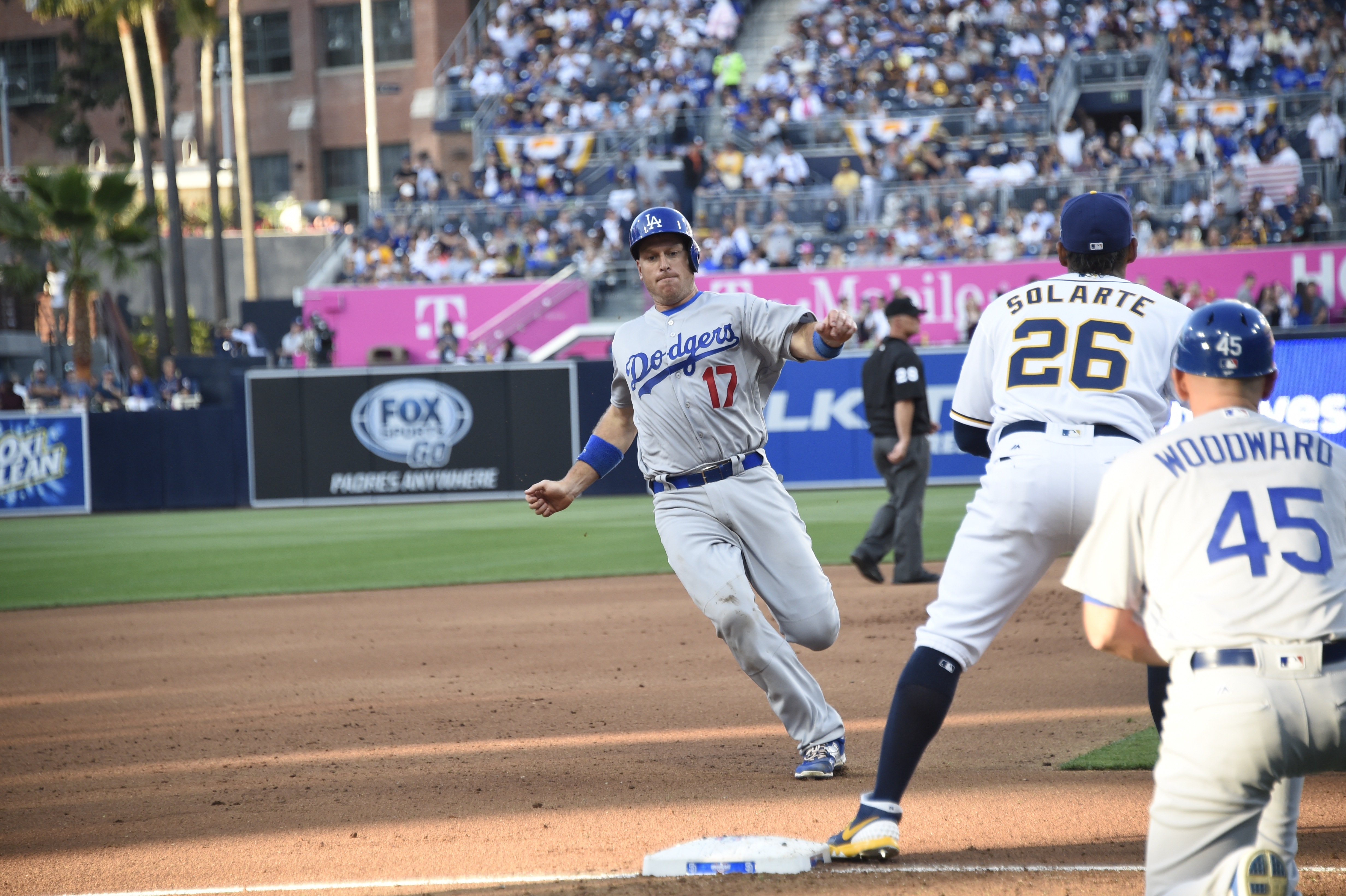
In today’s feature on A.J. Ellis, the Dodger catcher said he had no idea how high he ranked among the franchise leaders in games caught.
But there was one piece of history that Ellis was acutely aware of. That’s when I asked him if he remembered his last stolen base.
“That hasn’t happened in the Major Leagues, I know that,” Ellis said. “I think I’m top five without a stolen base for as many (times on base) as I’ve got.”
He was exactly right. Ellis has reached base 632 times in his career, without a steal. In MLB history, only four steal-heeled players, led by Russ Nixon (835), have been on the bases more — though Wilson Ramos, the opposing catcher in the recently completed series against the Nationals, is coming up, well, fast behind Ellis.
Ellis has a firm grip on the Dodger franchise record, having sped past Al Ferrara.
How badly does Ellis want to get a steal before his career is over? Or does he even want one?
“It’s kind of getting to that point now where it’s a fun fact about me,” Ellis said, “but, no I do. I’m always looking. I want to get one off somebody that it would really tick off. Like I want to get one off (Madison) Bumgarner, I think. That would really tick him off, to see that I stole on him. But he’s tough.”
By Jon Weisman
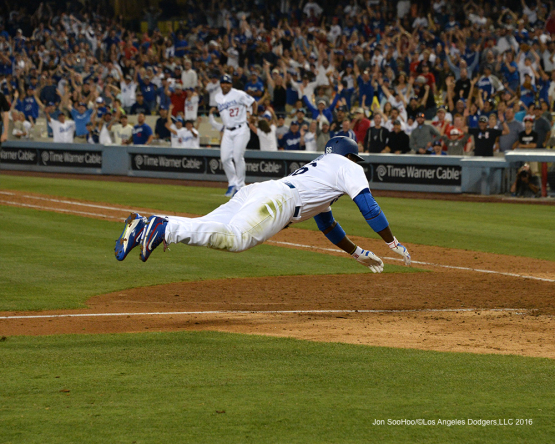
Still feels like there’s a buzz in the air over how very #Puignotlate the ending was to Wednesday’s game. Let’s provide some epilogues to that, as well as catching up on some other recent Dodger ephemera.
[mlbvideo id=”848082683″ width=”550″ height=”308″ /]

Steve Yeager, Pedro Guerrero and Ron Cey at the 2015 Old-Timers Game. (Juan Ocampo/Los Angeles Dodgers)
 By Jon Weisman
The 1981 World Series tri-MVPs — Ron Cey, Pedro Guerrero and Steve Yeager will be saluted at the annual Dodgers’ Old-Timers Day on July 2.
In that Fall Classic, Cey went 7 for 20 with a homer and three walks, Guerrero 7 for 21 with a double, triple, two homers and two walks, and Yeager 4 for 14 with two homers.
Cey’s biggest night was Game 3, when he hit a three-run homer in the first inning and started a double play with a diving catch of a bunt in foul territory in the eighth, backing a 40-batter complete game by Fernando Valenzuela in a 5-4 victory.
Guerrero and Yeager hit back-to-back, eighth-inning home runs off Ron Guidry to make a 2-1 winner of Jerry Reuss and the Dodgers in Game 5. In the Series finale, Guerrero singled, homered and tripled in the Dodgers’ 9-2 romp, making him the first player in 61 years to have all three of those hits in a World Series game.
Anyone else coming? Oh, you bet: Sandy Koufax, Tommy Lasorda, Don Newcombe, Tommy Davis, Maury Wills, Fernando Valenzuela, Orel Hershiser, Steve Garvey, Steve Sax, Bill Russell, Rick Monday, Nomar Garciaparra, Manny Mota, Al Ferrara, Shawn Green, Rick Honeycutt, Dave Roberts, Jerry Hairston Jr., Kevin Gross, Derrel Thomas, Mark Ellis, Nick Punto, Skip Schumaker, Jerry Royster, Kenny Lofton, Mickey Hatcher and Juan Castro are all scheduled to appear, with the tentative teams as follows:
Save #162. #WeLoveLA pic.twitter.com/uDOwlxW1Gl
— Los Angeles Dodgers (@Dodgers) June 21, 2016
By Jon Weisman
With a grounder by Anthony Rendon to Justin Turner and a throw to first, Kenley Jansen closed out the Dodgers 4-1 victory over Washington tonight and set the Dodgers’ all-time saves record with the 162nd of his career.
Jansen broke the tie he had forged with Eric Gagne on June 15. It was also Jansen’s 20th save of the season, making him the first Dodger to have five such seasons.
Eric Gagné calls @kenleyjansen74 to congratulate him on breaking his franchise record. #WeLoveLA pic.twitter.com/qijE2vkeUn
— Los Angeles Dodgers (@Dodgers) June 21, 2016
As was the case for his first career save on July 25, 2010, Jansen sealed a victory for Clayton Kershaw, who pitched six shutout innings before allowing his only run in the seventh inning.
Despite pitching in unKershawly heat, the Dodger lefty’s ERA dipped from 1.58 to 1.57, but more dramatically, he fanned eight (including Bryce Harper thrice) while walking none, improving his dominant strikeout/walk ratio to 144/7, or 20.1 to you and me.
Emergency starter Yusmeiro Petit pitched admirably for Washington, going six innings on 90 minutes notice, but was victimized by four extra-base hits, including a pair of homers (by Justin Turner and Joc Pederson) and a pair of doubles (by Corey Seager and Corey Seager).
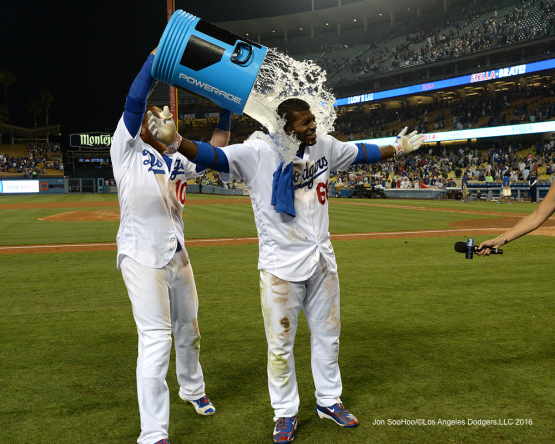
For Turner, it was his seventh homer of June (since June 7, in fact), giving him the team lead for the month over Seager. The last Dodger …
By Jon Weisman
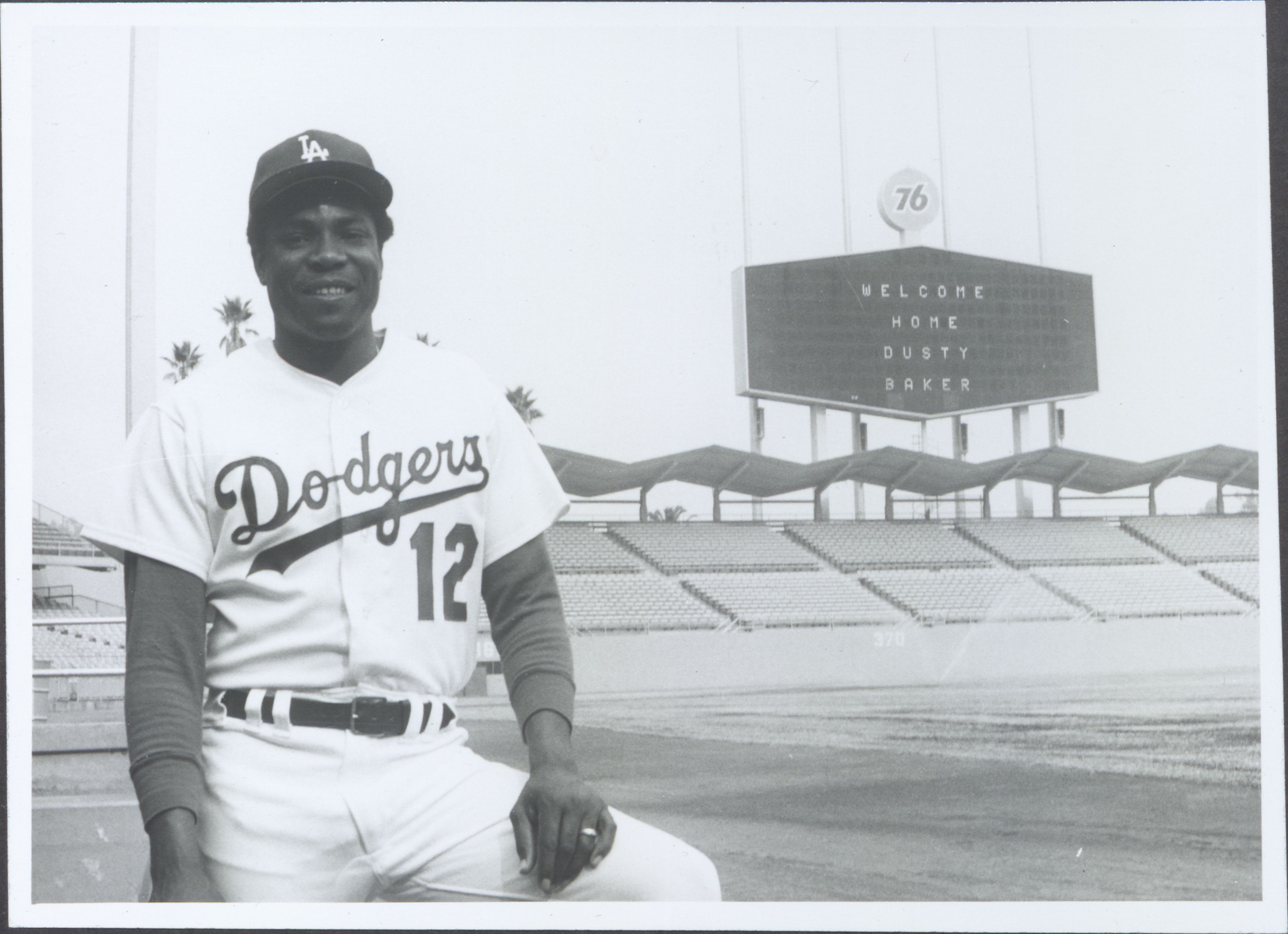
It’s been 40 years since Riverside native Dusty Baker made his debut in a Dodger uniform. He has also spent 40 seasons in the Major Leagues — 19 as a player (including eight with Los Angeles) and 21 as a manager, including this year’s debut season helming the Washington Nationals.
[mlbvideo id=”831429083″ width=”550″ height=”308″ /]
By Jon Weisman
Justin Turner’s weekend of heroics continued.
Turner’s third home run in two nights brought the Dodgers’ roaring back from a 5-2 deficit in the third inning, putting them on their way to a 10-6 victory over Milwaukee.
The biggest of the 14 Dodger hits that also included homers by Howie Kendrick and Joc Pederson, Turner’s blast — his sixth homer in his past 12 starts — marked the halfway point in the Dodgers’ six-run inning, their biggest of 2016. And it salvaged a night in which starting pitcher Mike Bolsinger couldn’t make it out of the third inning.
Roberts said @MBolsinger had cramping during his outing. Labored through 2.2 IP.
— Alanna Rizzo (@alannarizzo) June 19, 2016
In fact, Bolsinger and Milwaukee’s Chase Anderson, childhood friends who were best men at each other’s weddings, each threw exactly 29 balls and 44 strikes in 2 1/3 innings tonight. Anderson took the loss, while Chris Hatcher, who threw 2 1/3 shutout innings, was the Dodgers’ winning pitcher.
Hatcher, who made his MLB debut as a catcher in 2010 but went 0 for 6, also picked up his first career hit, an RBI single in the third.
[mlbvideo id=”831523083″ width=”550″ height=”308″ /]
Jon SooHoo/Los Angeles Dodgers
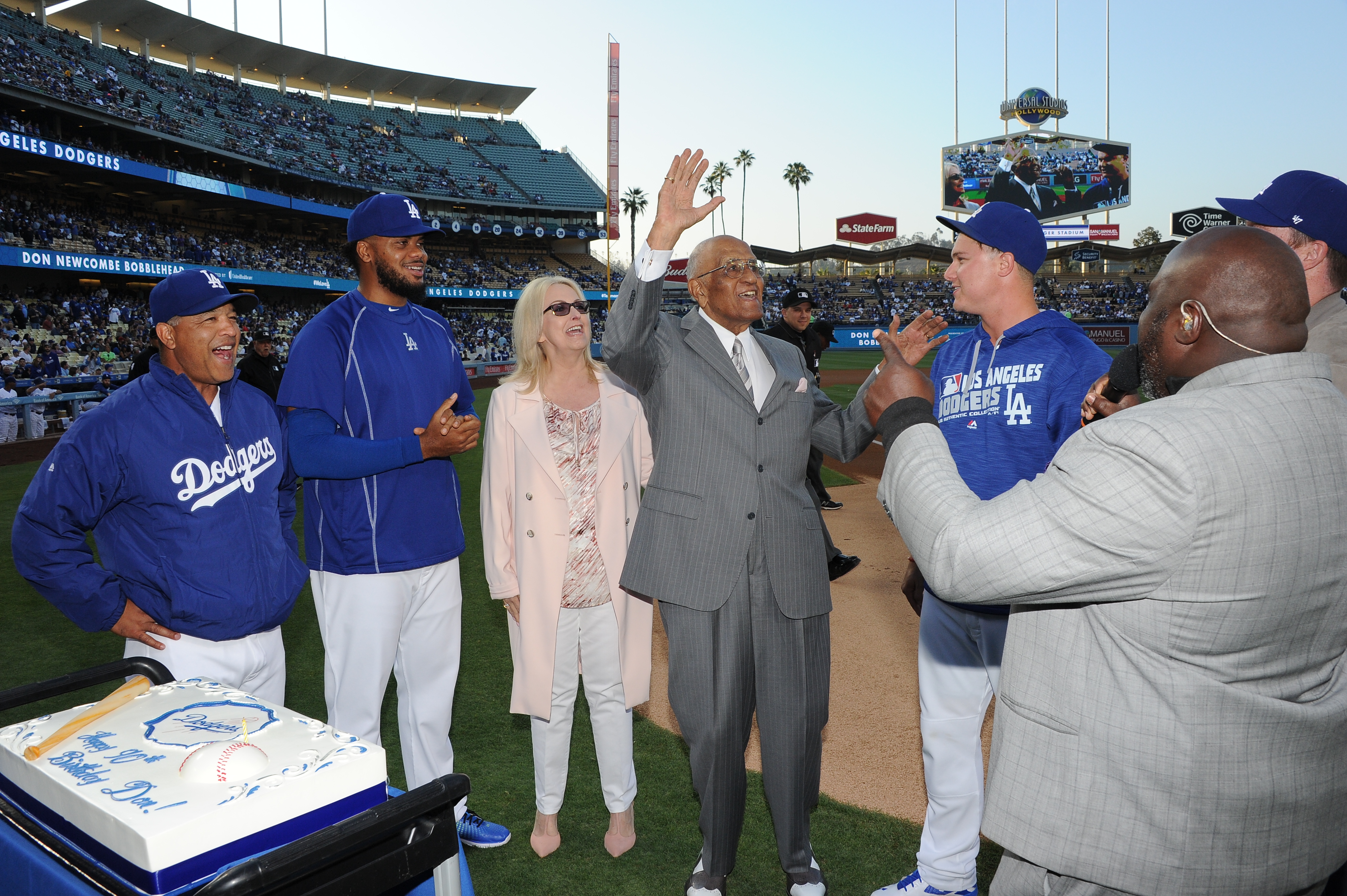
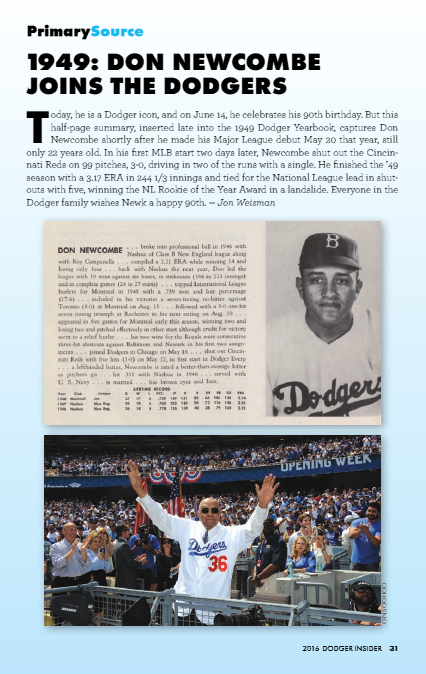
The Dodgers celebrated legendary pitcher Don Newcombe’s 90th birthday at their most recent homestand finale six days ago, but today’s the actual day. We all wish Newk a happy 90th!
— Jon Weisman
[mlbvideo id=”792778683″ width=”550″ height=”308″ /]
[wpvideo tPwNR7bi]
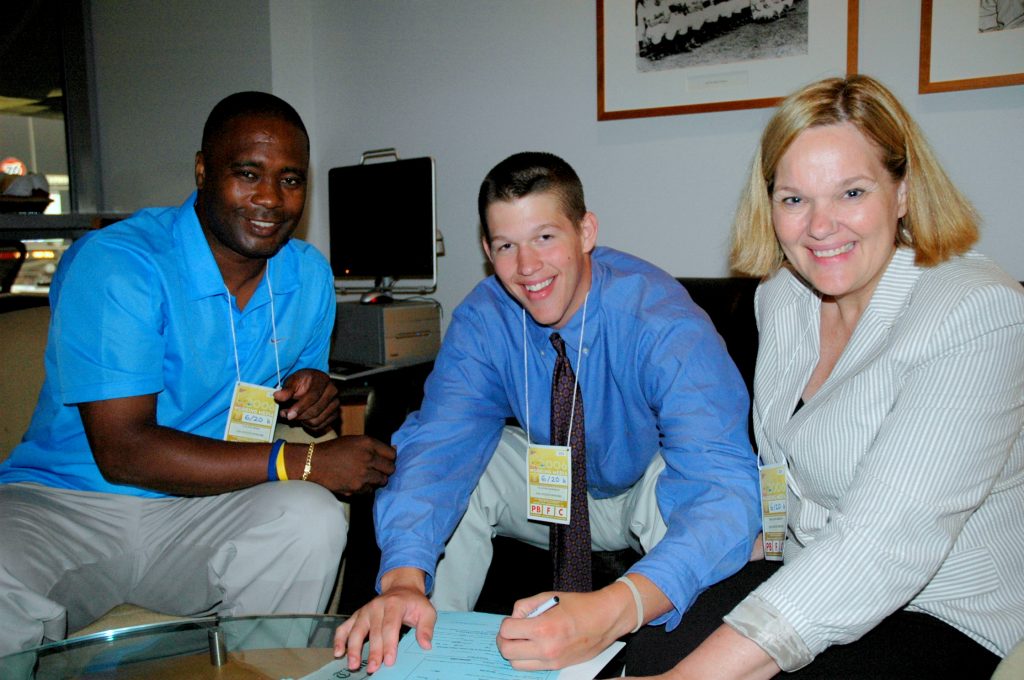
Flanked by Dodger scout Calvin Jones and his mother Marianne, 18-year-old Clayton Kershaw signs with the Dodgers. (Ben Platt/MLB.com)
By Jon Weisman
On June 6, 2006, the Dodgers made their best single front-office decision of this century and long before it.
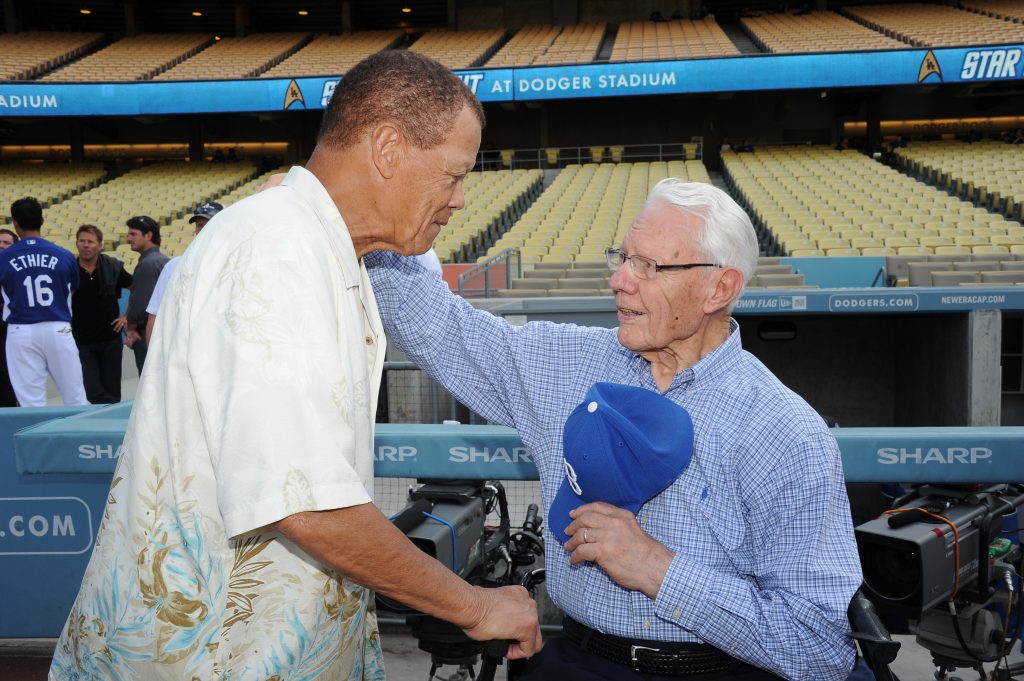
Maury Wills greets Lee Pfund in August 2012 (Jon SooHoo/Los Angeles Dodgers)
By Jon Weisman
Lee Pfund, who pitched 15 games for the Dodgers in 1945 and later went to become an immensely successful baseball and basketball coach at Wheaton College, passed away Thursday at age 96.
Pfund, the father of former Lakers coach Randy Pfund, coached Wheaton to the 1957 NCAA College Division basketball title and won 362 games from 1952-75, then later was honored by the school naming its baseball stadium after him.
Born in Oak Park, Illinois nine days after the 1919 World Series involving the Chicago White Sox ended, Pfund pitched two shutout innings on April 25, 1945, in his Major League debut, a memory he described in this Dodger Insider story commemorating the 70th anniversary of that moment and recalling his life in sports. Click here to read the entire story.
Our best wishes go to Randy Pfund and the Pfund family.
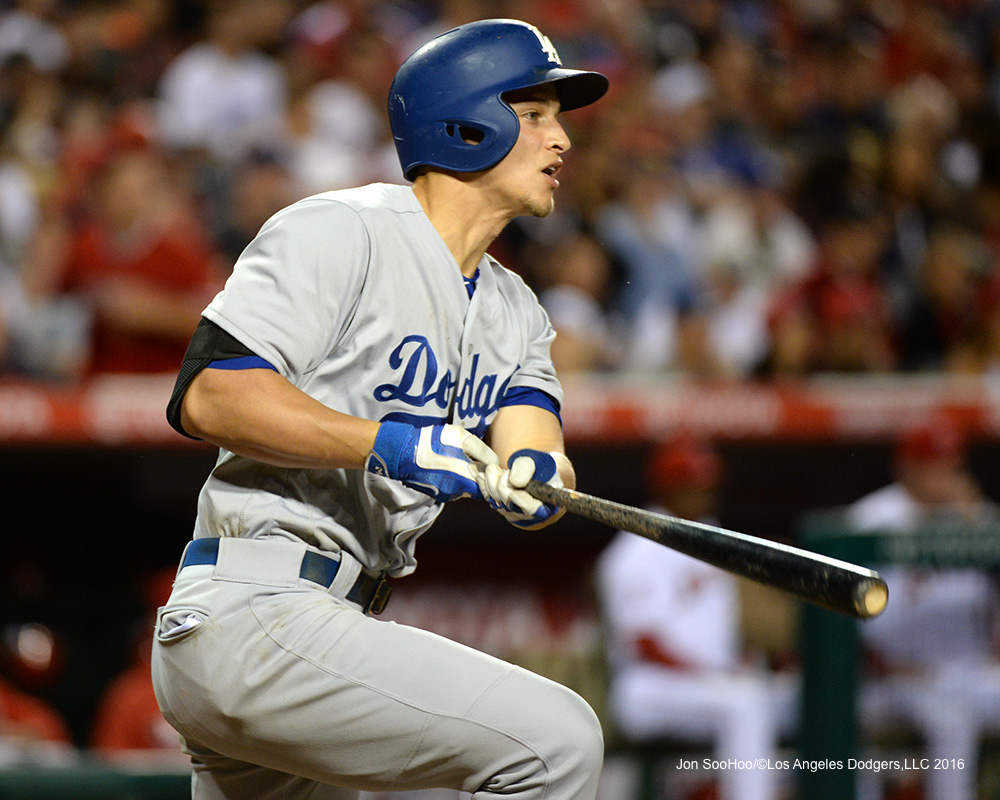
By Jon Weisman
It’s doubtful many people realize the kind of month that Corey Seager just had.
The 22-year-old’s three-run homer in the ninth inning of tonight’s 5-0 Dodger victory was his seventh round-tripper of the month, giving Seager a share of a franchise record.
Seager tied Hanley Ramirez for the most homers by a Los Angeles Dodger shortstop in a single month, according to my research at Baseball-Reference.com. Ramirez hit seven in August 2012, his first full month with the Dodgers after being acquired from Miami. (In fact, Ramirez hit all seven of his in the second half of that month, starting on August 16).
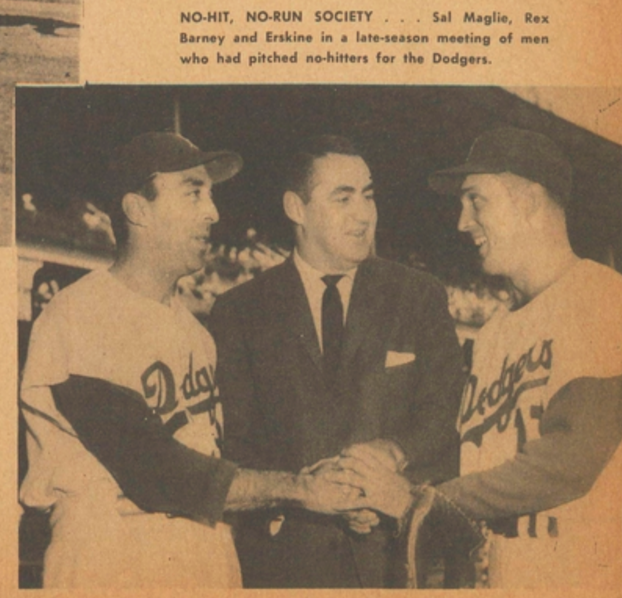
Section from Carl Erskine’s page in the 1957 Dodger Yearbook.
By Jon Weisman
Michael Tackett of the New York Times had a fine article over the weekend on 89-year-old Dodger great Carl Erskine, and the close, lifelong relationship he has had with childhood pal Johnny Wilson.
Their hometown of Anderson, Indiana paid tribute to the 88-year-old Wilson with a statue, and Erskine was key to making the honor happen.
… Erskine, the Brooklyn Dodgers pitcher who appeared in 11 World Series games and threw two no-hitters in the 1950s, and Wilson have been friends since meeting as children, in an alley with a basketball hoop attached to a barn, when Erskine offered an innocent invitation: “Do you want to play?”
One white child, one black, they were bound from that point by their love of sports and their meager economic circumstances during the Depression in this north-central Indiana factory town. The friendship with Wilson was Erskine’s bridge to his warm relationship with Jackie Robinson, whom he joined on the Dodgers in Robinson’s second season after breaking Major League Baseball’s color barrier.
One day, Robinson went out of his way to thank Erskine for speaking to his wife, Rachel, and children in front of white fans. Erskine said no thanks were necessary, and on Friday he said one name explained why: Johnny Wilson. …
Click here to read the whole story. This year marks the 70th anniversary of the Dodgers signing Erskine, after he served in the Navy at the tail end of World War II.
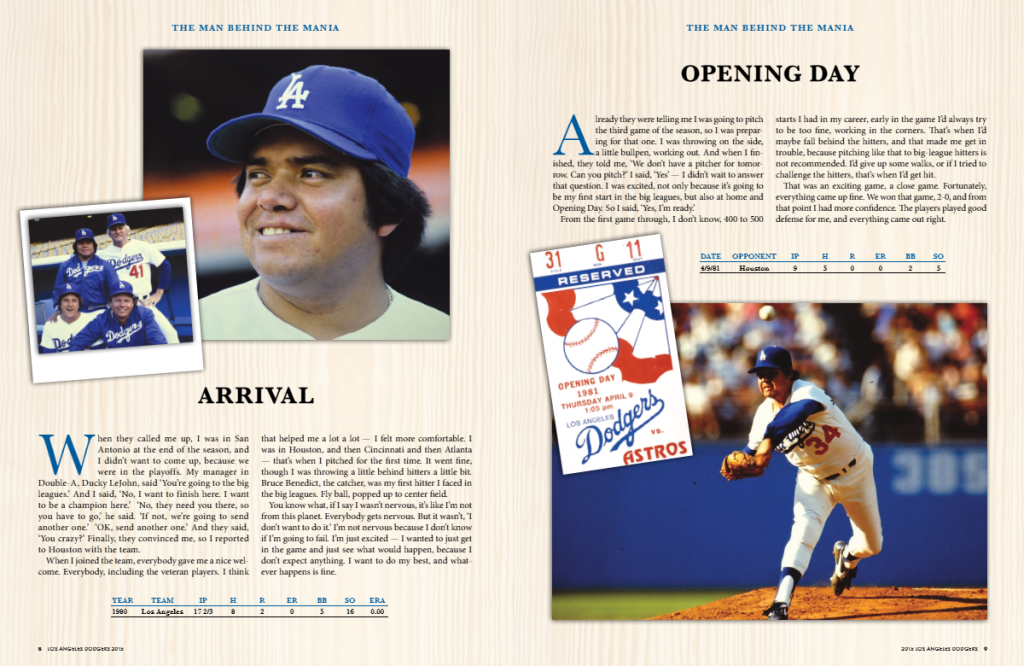
For our special section in the 2015 Dodger Yearbook dedicated to him, Fernando Valenzuela described his initial promotion to the Major Leagues in 1980 and the unforgettable start that launched Fernandomania in earnest in 1981. Click the image above to enlarge.
— Jon Weisman
By Jon Weisman
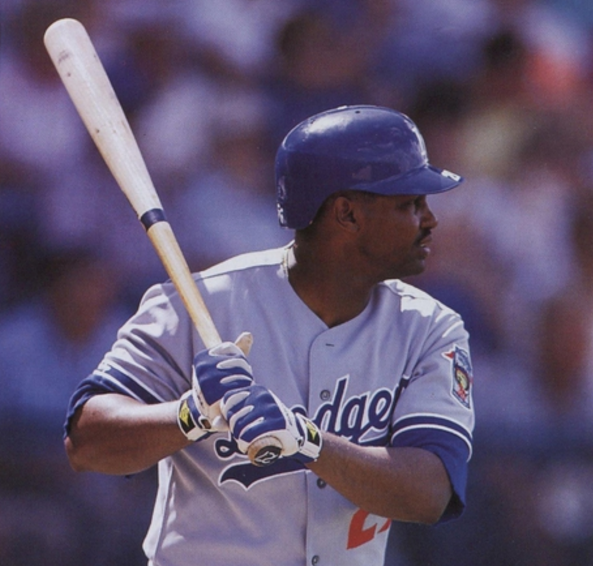
At 5:05 a.m., 20 years ago today, former Dodger All-Star infielder Mike Sharperson died at the age of 34, following a one-car accident near the junction of Interstate 15 and 215 in Nevada.
All-Star infielder. When Sharperson made the National League All-Star team in 1992, he and the Dodgers got a lot of grief. It was a year of grief. Los Angeles was in turmoil after the riots of late April. The Dodgers were on their way to their worst season in 87 years. Their best hitter was a 30-year-old who had never played a full season in the Major Leagues, whose career high in home runs was three.
The right-handed Sharperson was best known as a platoon partner of lefty-hitting Lenny Harris. A good contact hitter who batted twice for the Dodgers in the 1988 playoffs, Sharperson hit .297 with a .376 on-base percentage and more walks than strikeouts in 415 plate appearances in 1990. He played and hit a bit less in 1991, when the Dodgers lost the National League West title by one game.
Then in the spring and early summer of 1992, as Darryl Strawberry faded and before Mike Piazza arrived, Sharperson — still alternating at second and third base with Harris, Juan Samuel, Dave Hansen and Dave Anderson — somehow emerged as the Dodgers’ best hitter.
Come July, the Dodgers needed an All-Star representative, and Sharperson was it.
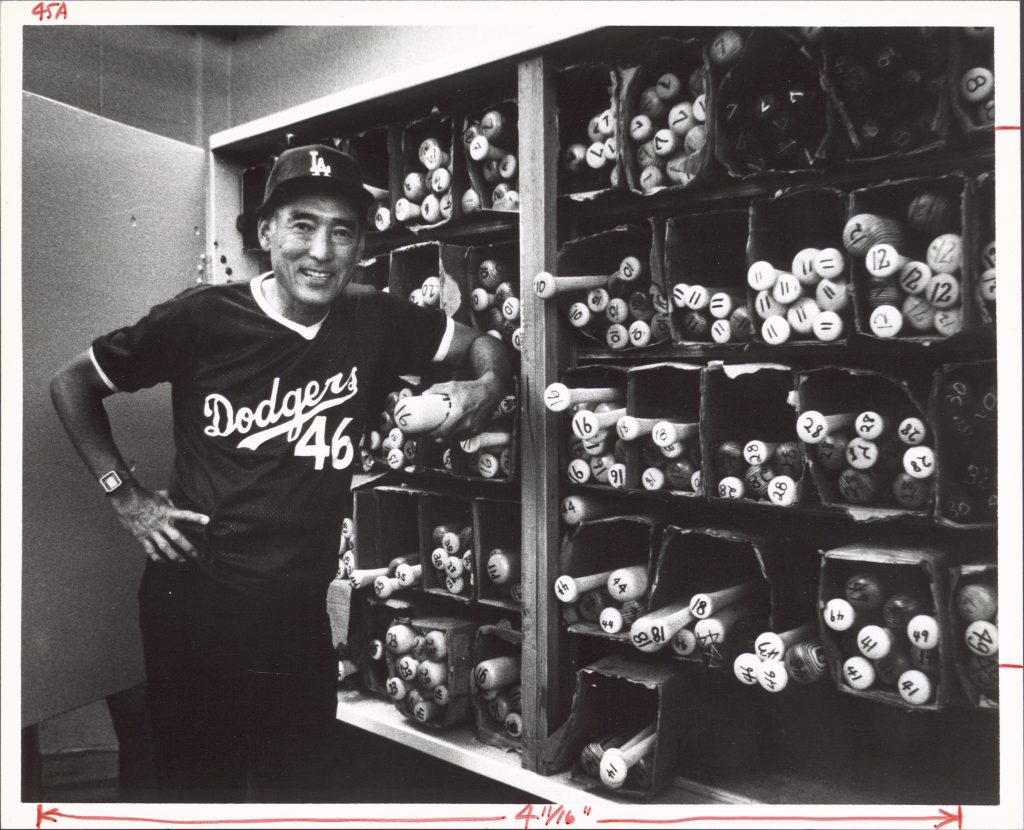
Nobe Kawano, pictured above, was the longtime clubhouse manager of the Dodgers from 1959-91, and his brother Yosh had the same role with the Cubs from 1953-2008. Now in their 90s, their stories are told in this terrific piece by David Wharton of the Times.
— Jon Weisman
What happens when three old friends in crisis fall into an unexpected love triangle? In The Catch, Maya, Henry and Daniel embark upon an emotional journey that forces them to confront unresolved pain, present-day traumas and powerful desires, leading them to question the very meaning of love and fulfillment. The Catch tells a tale of ordinary people seeking the extraordinary – or, if that’s asking too much, some damn peace of mind.

Thank You For Not ...
1) using profanity or any euphemisms for profanity
2) personally attacking other commenters
3) baiting other commenters
4) arguing for the sake of arguing
5) discussing politics
6) using hyperbole when something less will suffice
7) using sarcasm in a way that can be misinterpreted negatively
8) making the same point over and over again
9) typing "no-hitter" or "perfect game" to describe either in progress
10) being annoyed by the existence of this list
11) commenting under the obvious influence
12) claiming your opinion isn't allowed when it's just being disagreed with
Powered by WordPress & Theme by Anders Norén