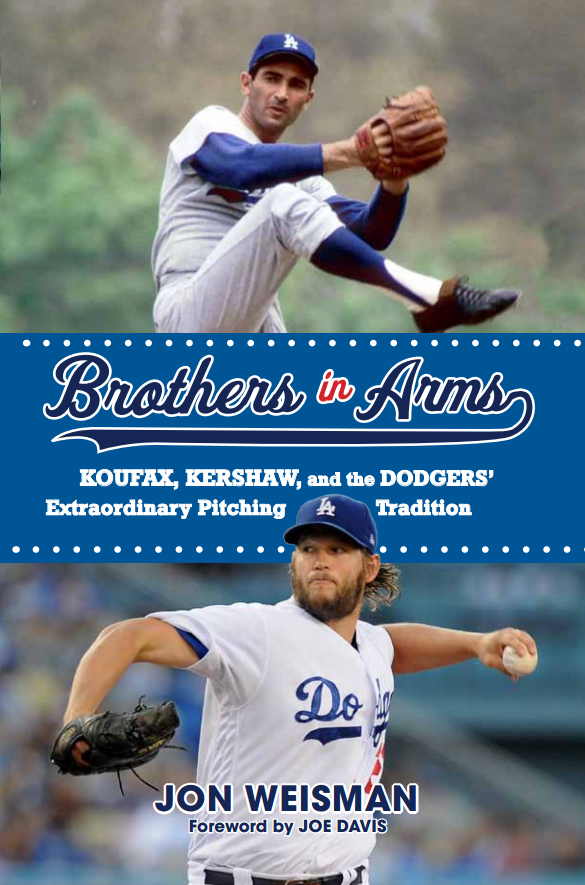
My second post today at ESPN.com’s Sweet Spot takes a trip to the cinema:
What do this month’s Oscars have to do with a baseball movie that is months away from even hitting theaters? Let’s answer by first taking a short trip back in time. …
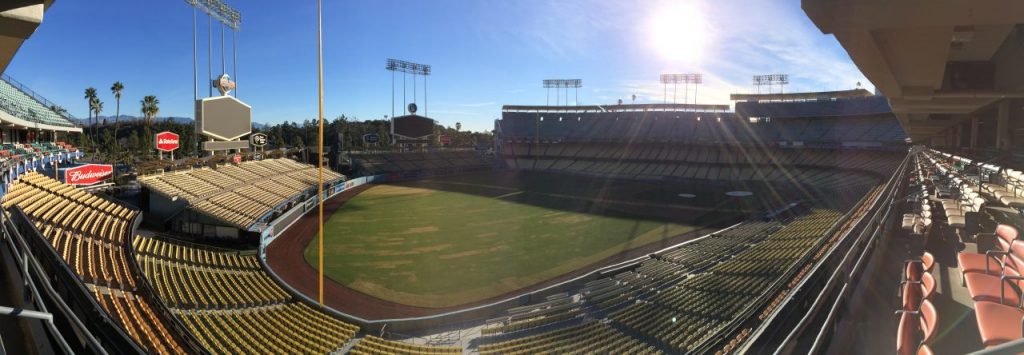
My second post today at ESPN.com’s Sweet Spot takes a trip to the cinema:
What do this month’s Oscars have to do with a baseball movie that is months away from even hitting theaters? Let’s answer by first taking a short trip back in time. …
As Russell Martin remains on his “Even though I said I was trying the past two years, I really wasn’t — but now that I’m gone, I really am” tour … some notes:
While determining who will succeed Rob Neyer in his national blogging spot at ESPN.com, members of the Sweet Spot blogging network are rotating through the mix. Today is my day, and I’m starting things off with … a post about the Giants.
Even the best teams usually need a lot of things to go their way to win the World Series, a run of good luck that can come to an abrupt end the following season, especially if you stand pat.
The San Francisco Giants mostly bring back the same team that won the title last fall. Although they no doubt peaked at the right time, there’s actually room for improvement from some key personnel. …
It could go either way for San Francisco, with health perhaps emerging as the biggest factor. Discussion of the Giants still begins with the pitching staff, but the rise of Buster Posey, the possible leap forward of Brandon Belt and the enigma that is Pablo Sandoval have made them much more interesting to me than in past years.
Ten days.
The Dodgers rose from the basement of the National League West in May to the best record in the league in June, then sat only two games out of first place in the division at the All-Star Break.
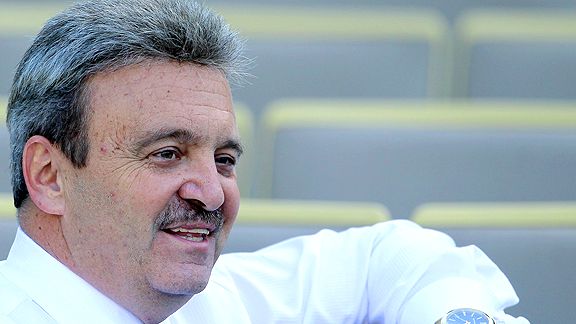
Yet as far as Dodgers general manager Ned Colletti was concerned, it was almost a mirage. During an interview at his Dodger Stadium office last week, Colletti fully acknowledged that the Dodgers’ second-half fade, as much as he and everyone else tried to reverse it, came as disturbingly little surprise to him.
Ten days. In Colletti’s view, that’s how long the Dodgers played championship-quality baseball in 2010.
“I think the second half, in a lot of ways, was the result of the first half and the spring,” Colletti said. “I can’t say I had more than a 10-day period where I thought we were truly playing as well as we could play. In ’09, we had a pretty good defense, and we executed, played well in clutch situations, found a way to win games. We really hadn’t done that very much in the first half of the season. And I think it caught up with us in the second half.
“And what I did last year wasn’t acceptable. How I prepared for last year didn’t meet the results that I have for myself.”
The Dodgers will arrive to spring training later this month, in many ways, a different team than a year ago, starting with a greater emphasis on starting pitching that represents Colletti’s most visceral response to his roster concerns from 2010. At the same time, Colletti said the experience the returning core gained from last year’s disappointment has the potential to play a significant, positive role in 2011.
“They’re professional, and this is their livelihood,” he said. “And you believe there’s enough pride and adjustment and education from this past year. A lot of guys haven’t gone through what they’ve gone through in the past year. That will put them in the right place coming in to know it’s got to be better and it’s got to be more focused.
“Because they’ve (succeeded) before, I’m confident. But then, last year was what it was. I’m cautious by nature. I take nothing for granted, at any point in my life at any stage. So I don’t take it for granted that it’s just gonna happen. I think it has to be prepared in order to happen.
Translated, Colletti believes the talent is there but the effort, focus and confidence need to return. He said the offseason preparation “is done to some point, and when you get to camp now it’s going to be up to Don [Mattingly] and his staff to have certain procedures in place and certain accountability set forth. And I obviously have to support that, and they have to buy into it.”
Comeback kids?
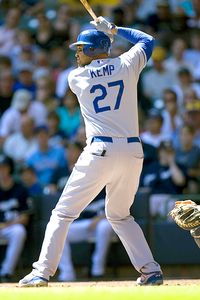
Despite leading Dodgers regulars on offense, Andre Ethier never fully seemed to recover from the pinky injury he suffered in May and fed doubts about his long-term ability to hit left-handed pitchers (.625 OPS against them in 2010, .681 for his career). James Loney went from decent before the All-Star Break (.803) to disastrous after (.616). Jonathan Broxton’s second-half collapse is as well-documented as anyone’s, and Matt Kemp … well, let’s just say his season could have been the inspiration for what made Linda Blair’s head spin in “The Exorcist.”
The question, Colletti agreed, is which of the players will hit a hurdle in their development in 2010, and which have hit a wall. And it’s a question that’s due for an answer. Mulligans that were handed out last year won’t be found so easily or at all in 2011.
“In the past, I’ve been more patient than open-minded,” Colletti said. “I think that one of the toughest characteristics you have to have in these jobs is patience because everybody expects everything to turn overnight. … It doesn’t work that way. Everybody’s human; these guys are all human. They take maturation, physical maturation, all kinds of processes.
“I won’t be able to be just completely patient with it [this year]. We’re not an old team, but we’re not a team overwhelmed with rookies, either. We have experience, and a lot of our players have been to the postseason at least twice and sometimes three times in the last five years. So it’s there, it’s really kind of going back to that point and being focused about it and passionate about it and tough-minded about it.”
It might surprise people to learn that Colletti seems particularly bullish about Kemp, the target of a radio critique by Colletti in April.
“I think probably from middle of August on, things became a little bit more focused for him,” Colletti said. “He and I had a conversation, probably in August, that was really a man-to-man, heart-to-heart, one-on-one conversation. And I was trying to take some of the weight off. I think he understands it; I think he understands what transpired last year. I think from my conversations this winter, from the last month of the season and this winter, I think he understands more than he did a year ago about himself and about the game, about preparation. So I think he’s got a chance to really have a great year.”
It’s possible Colletti might have said the same thing about Russell Martin, except Martin is no longer around. The circumstances of the Dodgers’ decision to let Martin go rather than offer him salary arbitration weren’t discussed, but Martin’s recent offseason comments about “distractions” that affected him led to a broader comment from Colletti about the difficulty of playing in Los Angeles.
“Sometimes, it’s commitment, prioritization and commitment,” Colletti said. “I read what Russell said, but I don’t know what the true context was or what his underlying thoughts were as to why he said it. … There are a lot of distractions in this city. There’s a lot of different things to be doing, a lot of places your mind can wander off to, but if you’re a professional baseball player, if you’re a Dodger, you’ve got to figure out life. … And it’s not easy to do it.”
Without going into many specifics, Colletti indicated that the ability to play in Los Angeles is a factor in some trades of young players he has made. He called Carlos Santana the prospect he regrets parting with “probably more than anybody” before he added that there were a couple of other guys he would have to wait and see on.
“Again, Los Angeles isn’t for everybody,” Colletti said. “Sometimes we make a move on a player because we know in this environment here, they’re not going to be very good in it.”
Pitching paradoxes
As for Broxton, count Colletti among those who see his second-half crumble as an issue of confidence, rather than health problems that might have been caused by his 48-pitch tar-and-feathering against the Yankees last June.
“He never complained,” Colletti said. “And at the end, he wasn’t thrilled with it, but I said, ‘Jonathan, I need you to take a complete physical — your arm, your shoulder, your elbow.’ A week to go in the season. And he said, ‘I feel great. I don’t need to do it.’ And I said, ‘I need you to do it.’ So he said, ‘I’ll do it,’ and everything came back clean.”
Colletti is aware of the volatility of relief pitchers, comparing them to great goaltenders who can go through “a month or two where they can’t stop anything.” But this awareness cuts both ways. It leads Colletti to give relievers who have performed in the past long leashes, and it compels him to have as many alternatives on hand as he can, as seen through the acquisitions of set-up men Matt Guerrier and Blake Hawksworth and oblique references to No. 6 starter Vicente Padilla’s potential to close games.
Again, however, Colletti believes that at rock bottom you can often find a trampoline. Look no further than Chad Billingsley, banished from the Dodgers’ starting rotation by the end of 2009 before rising anew last season.
“Most of our young players did not experience a lot of failure as young players, minor leagues [or] early in the big leagues,” Colletti said. “They really didn’t struggle. And when it finally hits you, and you do struggle for whatever reason and you’re doing it in front of 45,000 people in Los Angeles all the time, on television every day, that’s a tough time to struggle for the first time, for the really first time, and be able to come out of it.”
Interestingly, Colletti’s faith in failure recovery played a partial role in what many believe is the Dodgers’ greatest weakness heading into this season: the lack of a bona fide left fielder.
Angst in the outfield
This winter, the Dodgers didn’t bid on the two marquee outfield free agents, Carl Crawford and Jayson Werth, and you can safely conclude that was a reflection of their overall contract demands and the Dodgers’ budget. But when it came to alternatives, Colletti was wary of blocking two Dodgers outfield prospects who could each be major league ready a year from now, Trayvon Robinson and Jerry Sands, especially after the experience Robinson had in Jacksonville last summer.
“Robinson last year started off slow in Double-A, and we stayed with him and he figured it out,” Colletti said. “That to me was huge. Because he’s gonna have to figure that out. Because everybody struggles up here.”
There is the caveat that it’s not as if the current Dodgers never struggled in the majors or minors before 2010 — one could easily make the case that they did, but that their subsequent triumphs blotted out the memory. In any event, if he had found a signable veteran outfielder worthy of a multiyear deal, Colletti no doubt would have pulled the trigger. But he does feel optimistic over the long term about what he has.
“If I would have signed a left fielder for three years, who was again not one of those robust guys — I’m not sure there was a guy out there — then I’m really kind of blocking one of those two kids, and I’ve got faith in both of them,” he said. “Hopefully, not this year. Hopefully, it’s a year from now, but I have faith in both that they’ll be able to play and contribute. And actually I told them both that, too, in the fall — I told Trayvon way back in the summertime, ‘It’s important for me to know who you are and how you play. Because you know what, Manny’s not gonna be back next year. And I’ve got to make a decision whether I’m gonna go and tie up his spot for three or four years, or be patient and mix and match for a year and wait for you.'”
In the interim, Colletti is under no illusion that he has gold in the third outfield slot, so the Dodgers will essentially play it by ear in the outfield, with Mattingly looking at matchup opportunities for Tony Gwynn Jr., Marcus Thames, Jay Gibbons and Xavier Paul (if he makes the squad), and on an infrequent basis, Casey Blake or Jamey Carroll.
“Right now Matty’s the center fielder,” Colletti said. “Andre’s the right fielder. I want to see what Tony can do offensively. He’ll play as much as the offense allows him, I think … using the whole field, bunting more, figuring out ways to get on base, because his on-base percentage isn’t high even when he hits .270. See if he can become more disciplined at the plate, use his speed more to get on. I don’t expect power out of him. I don’t expect gap power out of him, but I would like to see him get on base a lot more, because if he does it perhaps changes the dynamics in the outfield.
“And in the meantime, I’ve got two guys that can hit, one from the left side and one from the right side — actually two from the left side with X. Paul and Gibbons, and then Thames. … And perhaps they’re five- or six-inning guys, and then you go defense later. But you’ve got two guys that might be able to hit 20 homers between them.”
Third base offers a secondary question for the Dodgers because, while Blake is sure to start against lefties and some righties, no one seems to be beating the drum for him to play 146 games like he did last season. With the Dodgers’ minor leagues fairly thin at second and third base, this time Colletti took the plunge on a multiyear stopgap in Juan Uribe.
“Our system’s produced a lot of guys,” Colletti said. “But except for really [Ivan] DeJesus, we don’t really have a second baseman that’s on the verge of being here. We have a shortstop coming probably in Dee Gordon and after him [Jake] Lemmerman, and right now third base is a bit of an open spot too — we had [Pedro] Baez in the Cal League last year. So Uribe, while the on-base percentage isn’t Moneyball-ish or whatever, the run production is still pretty good, in that he can play second, short or third, and we don’t have anybody that’s going to press him at third for a while, and really De Jesus is trying to transition to play second. I needed somebody I can run out there who’s a big league guy.”
Because of what he sees as a potential benefit to have Uribe play some at the hot corner, Colletti emphasized that De Jesus has a legitimate chance to make the Opening Day roster as a backup infielder. Obviously, someone like Carroll could also make several starts to allow Blake to rest.
In any case, Colletti is aware of how much a juggling act the Dodgers’ everyday lineup has become. Though he has in one sense traded last year’s lack of a fifth starter for this year’s lack of an everyday left fielder or third baseman, Colletti sees the two situations as apples and oranges.
Never enough
“You really didn’t have in my mind many choices that were going to be able to play every day,” Colletti said. “We had to fix the pitching first, and we had to upgrade the bullpen if we could.
“You can’t finesse pitching. Maybe a day here or there, but you need to have it. And the list [of available pitchers], we were kind of picking near the top of the list, even though it isn’t sexy to say you signed Ted [Lilly] or Hiroki [Kuroda], it’s not necessarily ‘wow,’ but it’s solid. It gave us a little bit of depth. So we had to start there. The kid from Minnesota, Guerrier, is gonna be a good add for us. He’s pitched in a lot of big games; he’s always had positive results.
“It’s the most volatile group, but once [Joaquin] Benoit got three years and [$16.5 million], that’s what people expect to get … and if you really need a guy, sometimes you have to go the extra distance to go and get him.”
Add together the total commitments the Dodgers made to their free-agent signees of this past offseason, and you barely pass the total value of Adrian Beltre’s deal by itself, while falling short of the Crawford or Werth contracts. And like it or not, Colletti was not going to enter another season shy on pitching or dependent on unproven rookies such as James McDonald or Scott Elbert.
“I was apprehensive all winter long last year” Colletti said of the starting pitching. “I knew we were short going in; I knew we weren’t going to be able to rally it. In the spring, J-Mac and Scotty both struggled. We may have sent them both out early, in fact, because they couldn’t throw strikes; they were all over the board. So right from the beginning, I knew we were going to be short. I didn’t know how we were gonna mix and match, and we couldn’t afford an injury certainly.”
If there’s an ongoing concern on everyone’s minds, it’s how the Frank McCourt ownership crisis is affecting spending on the team on the field. You can argue that different owners might have allowed Colletti to sign one big-ticket free agent in addition to shoring up the pitching, but Colletti doesn’t contend that the divorce itself is having an impact on personnel.
He also makes the case, as McCourt did a year ago, that the Dodgers are aiming to spend more money to deepen their prospect population.
Farm aid
“We’ve had basically the same [major-league] payroll,” Colletti said. “Though we dipped a little bit last year, we’re coming back this year. It’s not really how much you have, it’s where you spend it. We do have to get better at international signings; we have to reinvest there. I think we’ve let Venezuela slip for a few years, and we’ve made some changes in the staffing.
“We’ve done a decent job in the D.R. [Dominican Republic] — not what we did 25 years ago, but with all due respect, 25 years ago there wasn’t 30 teams down there, either. So, it’s not like we could just cherry-pick the players we want like we probably did at the outset of the country opening up to having players signed. But we do have to get better at that to support our player development system. It’s been fruitful. Obviously, a lot of players are in the big leagues now that we drafted, but we have to keep flowing, and they have to keep getting better. I know we’ve hit a touchable lull right now and I think we’re probably a year or two away from having another group come forward.”
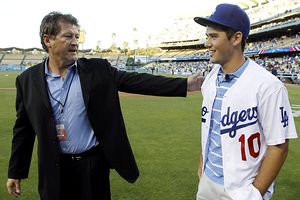
Colletti didn’t rule out the Dodgers’ top draft choice of 2010, Zach Lee — whose signing shocked most baseball observers — being part of the Dodgers’ graduating class of 2012. Amid the height of McCourt tensions, Lee received a $5.25 million signing bonus, a record for a Dodgers’ draft pick. The previous record-holder, Clayton Kershaw, reached the majors less than two calendar years after he was picked, and Lee could do the same.
“We really liked this kid,” Colletti said. “We really liked his makeup, his demeanor, his abilities, athleticism, his toughness. … Not only are the physical skills different than most kids you see, but the way his mind works is different … probably from playing at the highest levels at a couple of sports, including going to LSU for a summer and having that experience, which as long as he didn’t get hurt it didn’t bother me.”
Colletti’s hope is that the Dodgers’ minor league pitchers drafted in previous years allow Lee as much time as he needs to develop. There was an epidemic of setbacks among the farm system’s arms in 2010 — so many that if Colletti wants to see who can overcome hurdles, wish granted.
“It’s concerning to me,” he said. “Probably a lot of the guys that we could both probably name should be a year farther along than they are. They’ve all struggled with command. … Some are converted players, some weren’t pitchers necessarily in high school or college. So they’re still learning that.
Curing the epidemic
And to circle back to the beginning of our piece, in some ways, older players never stop learning and developing. Witness Colletti’s additional assessment of the contagion that struck the Dodgers’ offense in 2010:
“I think hitters sometimes without results start to get impatient, so they start to chase out of the zone,” he said. “They’re trying to build more offensive numbers in a quicker period of time and so they’re not as diligent to work the count, and all that stuff starts to compound through the course of it. … When people are starting to slump, sometimes it produces more guys that go in that direction than less. And that’s what started to happen. It started to spiral where one guy struggled and then two. And then the third guy saw the other two and then he struggled, and it continued to mount.”
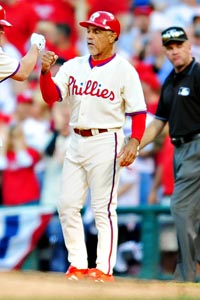
When you take Colletti’s view of what went wrong with the Dodgers last year and what’s needed to make it right, it makes sense that he sees one of the most promising offseason moves as one that even some jaded Dodgers fans embraced: the hiring of Davey Lopes as a coach.
“I’ve known him a long time and I’ve admired him,” Colletti said. “You know, I was with him in Chicago when he was still a player and I’ve certainly watched him from the other side of the field when he managed and when he was coaching. And I think what he brings here is — you’re talking about first — someone who was an iconic Dodger who understands Los Angeles and understands the Dodgers and was here during one of the greatest periods in our franchise’s history. That’s important.
“What he did in Philly with baserunning and defense and fine-tuning that position, the first-base coaching position, to make it a far more valuable position to the organization, is something we noticed. And I think he’s going to have a great impact on our club. I think there are some players that could turn their game up a notch with his instruction, with his thought process. I think, while it’s a coaching position, I think it’s a huge addition for this franchise.”
Will a new manager, new coaches, new players and new spirits be enough to right the Dodgers’ ship? It’s too soon to say, but if the Dodgers are to play more than 10 days of great baseball in 2011, Colletti will expect to see strong signs of it before Opening Day arrives.
Eric Chavez won’t be the uncertain solution to the Dodgers’ uncertain third-base situation. The oft-injured vet is headed to the New York Yankees on a minor-league deal, as is former Dodger Ronnie Belliard.
* * *
Fairly safe to say that the most scrutinized 2011 Dodger heading into the season will be Matt Kemp. Here’s more detailed analysis, from True Blue L.A. newbie Chad Moriyama,
The Dodgers will wear throwback uniforms at six 12:10 p.m., half-price-on-food-and-drink weekday games this season. You can vote on your pick at the Dodgers’ website.
The choices:
The first of the three uniform options was worn by the Dodgers exactly 100 years ago. The 1911 road uniform features fine narrow pinstripes and the BROOKLYN name displayed vertically in small capital letters down the button panel. Known as the “Superbas,” the Brooklyn team wearing this uniform played its second-to-last season in 1911 at Washington Park.
The second option is the 1931 road uniform, which was the only variety of the 1930s uniform designs to sport a block capital “B” on the front of the jersey.
The third option is the 1940s “Satin” road uniform, which is blue and features the trim and DODGERS script in white. With the advent of night baseball at Ebbets Field in the 1940s, the original uniform used a highly reflective satin fabric to be more visible under the lights.
Mike Scioscia’s Tragic Illness has a photo of the satin uniform.
Which do you like?
Health is this morning’s lead topic …
In the spirit of Jesse Orosco, the Dodgers have turned to an oldster in an attempt to add more lefty strength to their bullpen.
According to Jayson Stark of ESPN.com, Los Angeles has signed Ron Mahay — who will be 40 in June — to a non-roster deal.
Despite the age issues, this is no Merkin Valdez signing. Mahay, who has pitched in 514 career games, allowed only 41 baserunners in 34 innings with Minnesota last season. Against lefties, Mahay gave up 12 singles, a double, a homer and two walks in 68 plate appearances — a .520 OPS.
Mahay will give Scott Elbert, among others, a challenge in Spring Training, and it’s hard to say it’s not justified. It’s been these types of signings that have been among the brightest in general manager Ned Colletti’s tenure — low-risk moves with legitimate chance of reward.
Update: The Dodgers confirmed the signing at 3:30 p.m.

The Dodgers have signed Hong-Chih Kuo to a one-year contract that pays $2.725 million plus incentives. Tony Jackson of ESPNLosAngeles.com has details.
James Loney is the lone remaining potential 2011 salary arbitration case for Los Angeles.
The Dodgers have signed former San Francisco Giants and Toronto Blue Jays reliever Merkin Valdez to a minor-league contract, though without giving him an invitation to big-league camp at Spring Training. (Matt Eddy of Baseball America first reported the signing.)
Valdez is looking to rebuild his career. The 29-year-old righthander pitched 67 games for the Giants from 2004-2008 with a 5.24 ERA, allowing 115 baserunners in 67 innings while striking out 53. Last year, he allowed three runs in 1 1/3 innings for Toronto while spending most of the season with Triple-A Las Vegas, where he had a 7.91 ERA in 58 innings.
A native of the Dominican Republic, Valdez was originally signed by the Atlanta Braves in 1999, then came to the Giants in 2002 (with Damian Moss) in a trade for … Russ Ortiz.
Most teams that reach the World Series suffer a falloff in team ERA the following year, writes Tim Kurkjian of ESPN.com. Whether the defending champion San Francisco Giants will succumb to the trend, however, remains to be seen.
… We looked at the World Series participants in the past 10 years, and the effect on the pitching staffs the following seasons to those 20 teams. Fourteen of the 20 — 70 percent — had an ERA increase the next season. Eight of the 20 — 40 percent — had an increase of least a half run, which is substantial. The 10 teams that won the World Series averaged an increase in ERA of .281. The 10 losing teams averaged an increase of .213. The Detroit Tigers went to the World Series in 2006 and compiled a 3.84 ERA, but had a 4.57 ERA the next year, a .73 increase. The St. Louis Cardinals won the 2006 World Series and had a 3.57 ERA, but it increased by 1.08 to 4.65 in 2007. The Chicago White Sox won the World Series in 2005; their team ERA the next year went from 3.61 to 4.61. …
There could be a number of reasons for an ERA increase the year after making it to the World Series. A bigger workload would represent only one of them. Some staffs are damaged by a loss in free agency (Cliff Lee?), or a trade. The ERA for the 2007 Cardinals increased dramatically in part because ace Chris Carpenter missed the season due to an arm injury.
“I believe our ERA went up in 2009 [by .53] because of an ineffective bullpen,” Tampa Bay Rays pitching coach Jim Hickey said. “When the phone rang down there that year, no one knew who it was for. [Workload] is an issue, but I’d be interested to see about the teams that have been there [the World Series] over and over again, what that does to the ERA the next year. When we made it in 2008, it was the first time for most guys. If the Rays had made it in 2010, we would have been better off because we had been through it once.” …
The Giants and Rangers will need to recover. The Giants played 15 postseason games, a total of 135 innings. Ace Tim Lincecum threw 37 innings in the postseason, raising his season total to 249 1/3, a career high and 22 1/3 more innings than he had ever thrown in a season. Matt Cain pitched 21 1/3 innings in the playoffs, raising his total to 244 2/3, 27 more than he had ever thrown. Jonathan Sanchez threw 20 innings in the postseason, raising his total for the season to 213 1/3, 50 more than he had ever thrown. Madison Bumgarner pitched 20 2/3 innings in the playoffs, raising his total (major and minor leagues) to 214 1/3, 72 more than he had ever thrown in a season. And closer Brian Wilson appeared in 10 games in the postseason, totaling 80 for the season, 12 more than his career high. …
ERA changes for the Dodgers after their most recent World Series appearances:
1988: 2.96 ERA, 114 ERA+
1989: 2.95 ERA, 117 ERA+
1981: 3.01 ERA, 112 ERA+
1982: 3.26 ERA, 107 ERA+
The big news for us writers and fans of baseball writing is that Rob Neyer’s leaving ESPN.com after 15 years, destination to be announced. Tributes have come across the Internet fast and heartfelt, because Neyer was a pioneer in online baseball writing, open-minded, intelligent and fun, and always welcoming to new points of view (including mine in the earliest days of Dodger Thoughts). All my best to him for the future.
It’s funny — coincidentally, my first anniversary with ESPNLosAngeles.com is Tuesday, and I really wanted to thank Eric Neel, Becky Hudson and the whole crew for how well they’ve treated me. Hopefully, it’s a relationship that will continue for a long time.
Elsewhere …
… Last year’s Classic was staged for the benefit of the Dodgers Dream Foundation. While this year’s Classic will instead be a revenue-producing event for the Dodgers, a club spokesman said that change has nothing to do with the fact the Dodgers Dream Foundation, the team’s official, non-profit charitable organization, is presently under investigation by the California attorney general’s office.
That investigation centers on questions surrounding compensation to the foundation’s former chief executive, Howard Sunkin, who now is employed by the club in a different role heading up the community-relations department, according to multiple reports.
“It essentially came down to complying with NCAA requirements that an event of this nature had to have a title sponsor attached to it,” said Josh Rawitch, the Dodgers’ vice president for communications. “We were fortunate enough to bring in the Automobile Club of Southern California in place of the Dodgers Dream Foundation.”
The participating schools — USC, UCLA, the University of Georgia and St. Mary’s College from the Bay Area — won’t receive any of the revenue for the event, also in compliance with NCAA rules. The games will count on the schools’ regular-season records, but the USC-UCLA game won’t count in the Pacific-10 conference standings. …
UCLA is ranked No. 1 in the USA Today/ESPN.com preseason college baseball poll.

It wasn’t easy picking the All-Time Los Angeles Dodgers Import Team, as you can now truly see. The following roster includes my leftovers and suggestions by Dodger Thoughts commenters. Keep in mind that players such as Maury Wills were ineligible, even if they left and came back, because I still consider them homegrown Dodgers.
I also went back and forth on whether to include international imports like Hideo Nomo and Hiroki Kuroda … this morning, I decided that I would make them eligible.
Wally Moon at first base is a bit of a stretch, but he did play some there, and it helped out with the ongoing overload of outfielders. One of the more fascinating revelations of this exercise is how much the Dodgers have gone outside the organization for outfield help, relative to other positions. It’s remarkable how many great seasons the team has gotten from outfielder outsiders – and these lists don’t even include one-season-or-less wonders like Dick Allen, Steve Finley and Frank Robinson.
At positions like catcher and the middle infield, on the other hand, you can see the impact of having longtime homegrown solutions. It’s slim pickings for the best of the imports.
Starting lineup (8)
Brett Butler, CF
Andre Ethier, RF
Manny Ramirez, LF
Wally Moon, 1B
Todd Hundley, C
Tim Wallach, 3B
Lenny Harris, 2B
Cesar Izturis, SS
Bench (7)
Rick Monday, OF
Kal Daniels, OF
Len Gabrielson, OF
Olmedo Saenz, IF
Alfredo Griffin, IF
Bill Madlock, IF
Chad Kreuter, C
Starting rotation (5)
Hideo Nomo, RHP
Derek Lowe, RHP
Claude Osteen, LHP
Hiroki Kuroda, RHP
Tim Belcher, RHP
Bullpen (5)
Takashi Saito, RHP
Ron Perranoski, LHP
Jeff Shaw, RHP
Terry Forster, LHP
Guillermo Mota, RHP

People like me take pride whenever a homegrown Dodger makes it big in Los Angeles. But for once, I thought I’d turn the spotlight on the outsiders who made it in.
Here are my choices for the All-Time Los Angeles Dodger Import Team, which I’ve decided has very durable pitching but will substitute freely with its outfield:
Starting lineup (8)
Jimmy Wynn, CF
Reggie Smith, RF
Pedro Guerrero, 3B
Gary Sheffield, LF
Eddie Murray, 1B
Jeff Kent, 2B
Rafael Furcal, SS
Tom Haller, C

Bench (8)
Dusty Baker, OF
Kirk Gibson, OF
Manny Mota, OF
Shawn Green, OF-1B
Casey Blake, 3B-1B
Derrel Thomas, IF-OF
Mike Sharperson, IF
Rick Dempsey, C
Starting rotation (5)
Kevin Brown, RHP
Tommy John, LHP
Burt Hooton, RHP
Jerry Reuss, LHP
Andy Messersmith, RHP
Bullpen (4)
Mike Marshall, RHP
Jim Brewer, LHP
Jay Howell, RHP
Phil Regan, RHP
There were some tough choices to leave off the team. Who do you think they were, and do you think I made the right decisions?
Seven seasons removed from All-Star status, right-handed reliever Mike MacDougal has signed a minor league contract with the Dodgers and received an invitation to major league spring training.
MacDougal, who turns 34 in March, reached the 2003 All-Star Game with Kansas City (though he did not play) and as recently as 2009 had a 3.60 ERA in 50 innings with Washington.
Last season, however, MacDougal allowed 15 runs and 36 baserunners in 18 2/3 innings with St. Louis, and compiled a 4.45 ERA with three minor league teams.
Since 2007, MacDougal has allowed more than 16 baserunners per nine innings in the majors. In trying to make the major league bullpen for the Dodgers, MacDougal will have competition from such righties as Jonathan Broxton, Kenley Jansen, Vicente Padilla, Matt Guerrier, Ronald Belisario, Blake Hawksworth and Ramon Troncoso.
Also …

What happens when three old friends in crisis fall into an unexpected love triangle? In The Catch, Maya, Henry and Daniel embark upon an emotional journey that forces them to confront unresolved pain, present-day traumas and powerful desires, leading them to question the very meaning of love and fulfillment. The Catch tells a tale of ordinary people seeking the extraordinary – or, if that’s asking too much, some damn peace of mind.

Thank You For Not ...
1) using profanity or any euphemisms for profanity
2) personally attacking other commenters
3) baiting other commenters
4) arguing for the sake of arguing
5) discussing politics
6) using hyperbole when something less will suffice
7) using sarcasm in a way that can be misinterpreted negatively
8) making the same point over and over again
9) typing "no-hitter" or "perfect game" to describe either in progress
10) being annoyed by the existence of this list
11) commenting under the obvious influence
12) claiming your opinion isn't allowed when it's just being disagreed with
Powered by WordPress & Theme by Anders Norén